
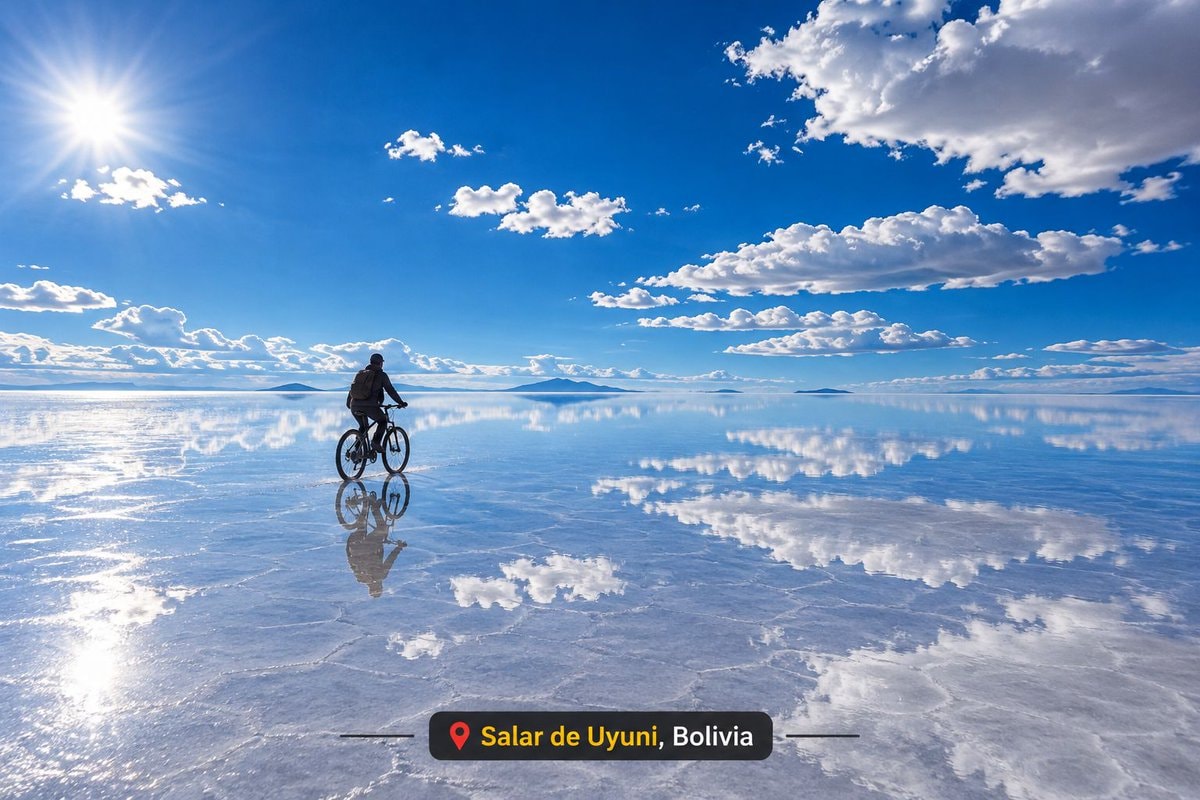
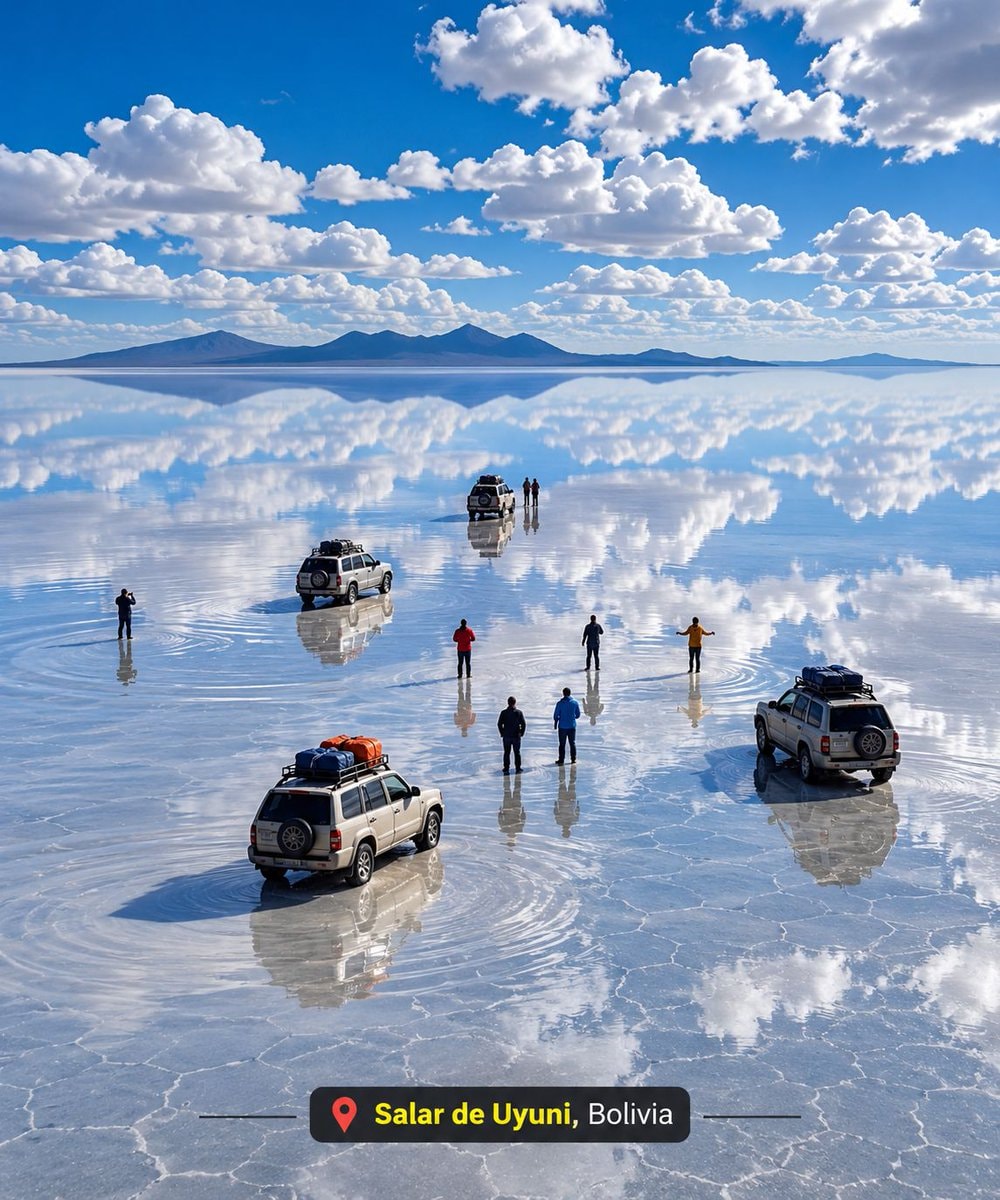
@anderson_joshuaThe bit about Salar de Uyuni that stays with me isn't the reflection, it's what's buried under it. Huge deposits of lithium-rich brine lie beneath the salt, and that matters a lot for the batteries modern tech runs on. Above ground you've got the largest salt flat on Earth, roughly 10,582 square kilometers (4,086 square miles) of it in Bolivia, and the whole thing came from ancient lakes that slowly dried out and left a massive salt crust behind. Then the rainy season rolls in. A thin film of water spreads over a surface so flat it barely registers, and the sky gets copied onto it almost perfectly, a giant mirror doing its thing. Clouds end up overhead and underfoot at once. Far-off mountains look like they're hovering. The edge between earth and sky practically stops being a thing. Hence the nickname "The World's Largest Natural Mirror," and none of it needs effects or editing. It's just nature. Out there the horizon seems to vanish, cars look like they're driving across the sky, and people seem to be walking between two worlds. So which would you pick: bright blue sky overhead, or night with the stars mirrored on the surface? Worth noting the visuals here are artistic recreations inspired by the actual Salar de Uyuni in Bolivia.
Originalbeitrag ansehen






Noch keine Kommentare. Sei der Erste!