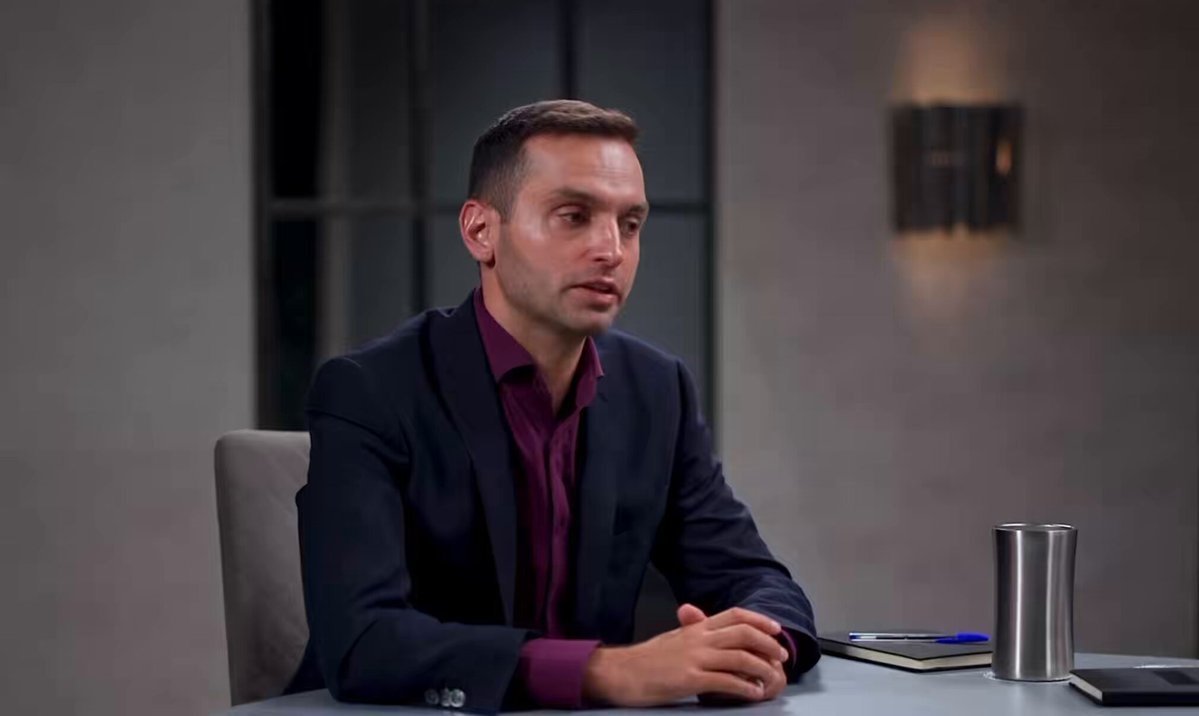
Kisin Keen AI Communism Debate
von Tim Official: Steven Bartlett
Wait, the guy who built a career warning the West that communism destroys everything just argued it is now unavoidable. Konstantin Kisin grew up in the Soviet Union. His anti-communist credentials are well established. He appeared on Diary of a CEO with Steven Bartlett to explain why AI changes the entire equation. Kisin told Bartlett to be very careful about praising communist dictatorships. He insisted that democratic socialism should be called communism because that is what it is. Then he laid out the trajectory using the Marxist maxim itself: "Communism is an inevitability. From each according to his ability, which will be zero, to each according to his needs." His standard argument against these systems is specific. Kisin explained that communism fails because it takes from the disproportionately productive 20% and spreads it across everybody else. This dynamic destroys their incentive to produce anything. Innovation halts. Everyone ends up equally poor. That is the core of his case against it. But machines remove that human variable. If machines do the work, there is no productive 20% left to disincentivise. The mechanism that causes historical collapse simply stops existing. He then described how the transition gets enforced in this new reality. If six people end up owning every asset on Earth that produces income, they either share or they find their heads on spikes. One suggestion was that owners could build robots powerful enough to keep everyone outside the walls. Kisin said the heads still end up on spikes. Steve Keen, the economist who called 2008, went even further during that same episode. Keen stated that the United States needs a democratic socialist in office. He argued that taxation cannot fund this shift, so the government has to create the money outright. If clerical work vanishes and most people own no capital, they have no income. They cannot buy the goods the robots produce. Keen used the term "hunger games" for that outcome. Kisin and Keen spent the whole episode disagreeing. They fought about climate, China, borders, welfare, and whether elections should exist at all. Keen said he would rather scrap elections entirely and hand the country to engineers. He said he would take the Chinese system over the American one. Kisin contested every inch of it. Yet they agreed on this single point. AI makes communism inevitable. Kisin said nobody can stop it. Entry level jobs will disappear while AI valuations climb into the trillions. People looking at their own unemployment will blame whichever politician happens to be in office. The strongest case against all of this is that these companies are losing money hand over fist. Nobody has built anything close to a general intelligence. Predictions like this have a long history of arriving late or never. But the men building it are not waiting for that argument to be settled. Neither is the money behind them. #StevenBartlett #AI
Transkript (en)
If we get to the position where AI is doing all the work, communism is an inevitability, i.e. from each according to his ability, which will be zero to each according to his needs, which will be whatever our needs are. Right. So once we get if and when we get to that point, that seems kind of inevitable. The mechanism by which we achieve that, whether it is taxation or whatever. I struggle to understand the economic concept that Steve has been presenting, but you But we probably don't have time to get into that. Nonetheless, a form of redistribution will be inevitable because as we spoke about last time, if six people in the world own all the revenue generating assets in the world, they are either going to have to share it or they're going to find their heads on spikes. That's a fact. Unless they can have really powerful robots to stop the rest of us from climbing over their big walls, even then the heads are going to be on spikes. So I would not recommend that approach to the big tech AI oligarchs. But I think we're talking about, I was going to use the term long term. No one knows what short, medium, and long term is in AI because nobody knows how quickly we're likely to get to that point where we're talking about, which is kind of artificial generalized intelligence, i.e. a machine that can think like humans and probably faster and better. And robotics. And then, of course, it will create robots that can do physical things faster and better than humans. But we are not there at the moment, I think it's fair to say.