Einstein ring gravitational lensing explained
von Canyon Owen: Albert Einstein
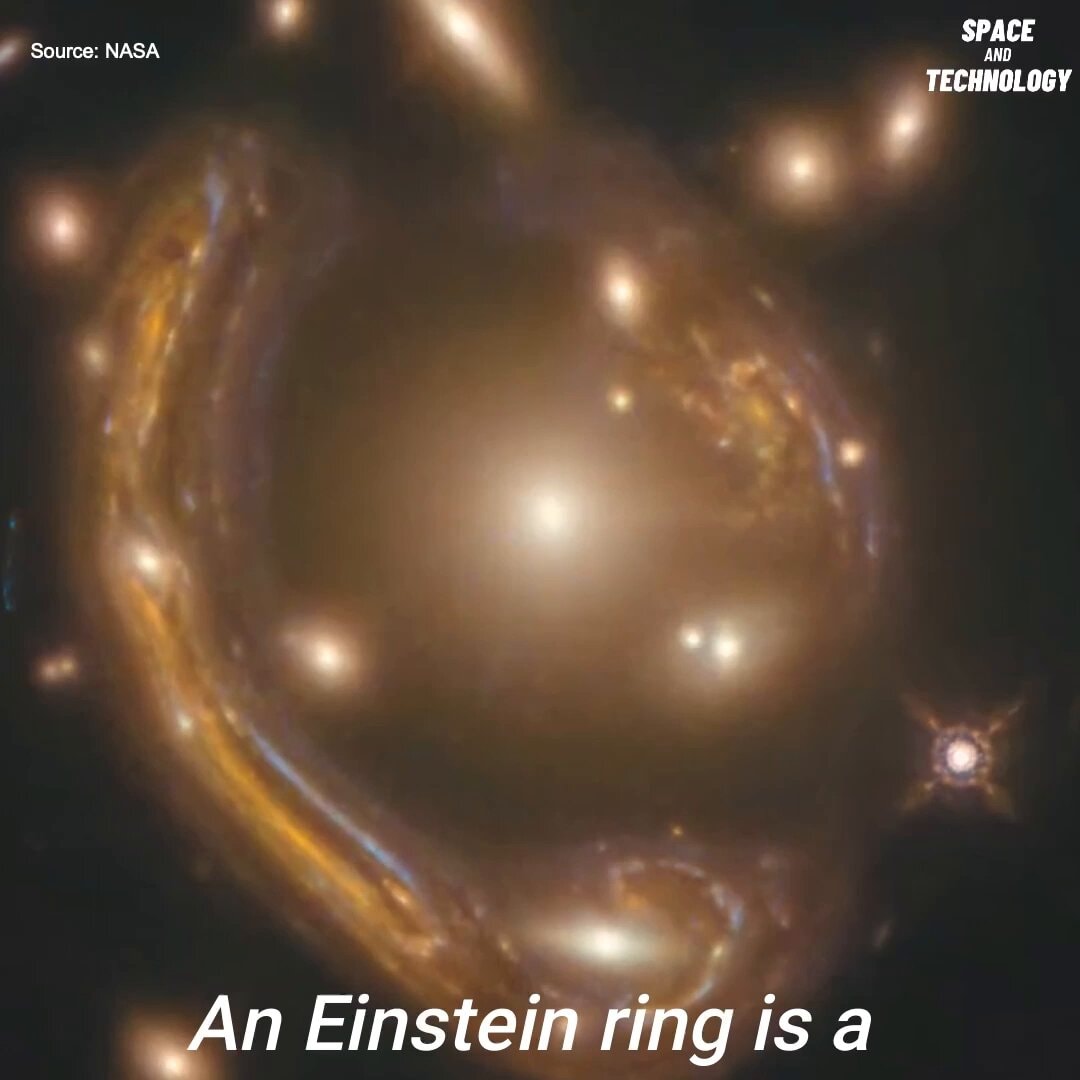
Gravity can turn a foreground galaxy into a cosmic lens, bending a background galaxy's light so it wraps into a ring. That is gravitational lensing, and the result is an Einstein ring, a rare alignment where the stretched glow circles the closer galaxy almost perfectly. Astronomers use the setup as a natural telescope, since the magnification reveals far-off galaxies that would otherwise stay hard to pick out. The name honors Albert Einstein, whose general relativity predicted the lensing effect, and the rings have opened fresh research paths: probing how mass is distributed in massive objects, testing for dark matter, and studying the universe's large-scale structure. NASA's explainer is still the kind of thing that makes me sit with space footage for a while.
Transkript (en)
An Einstein ring is a fascinating astronomical phenomenon that occurs when a massive object, such as a galaxy or a cluster of galaxies, aligns perfectly with a distant light source, such as a quasar or a star. The massive object bends and magnifies the light coming from the background source, creating a circular shape around the object, known as the Einstein ring. This effect is named after Albert Einstein, who predicted the existence of gravitational lensing in his theory of general relativity. The discovery of Einstein rings has opened up new avenues of research for astronomers, allowing them to probe the properties of massive objects in the universe, such as the distribution of matter and the existence of dark matter. Einstein rings are a testament to the power of science and the incredible beauty of the natural world. They have revolutionized our understanding of the cosmos, and provided valuable insights into the nature of dark matter and the large-scale structure of the universe.