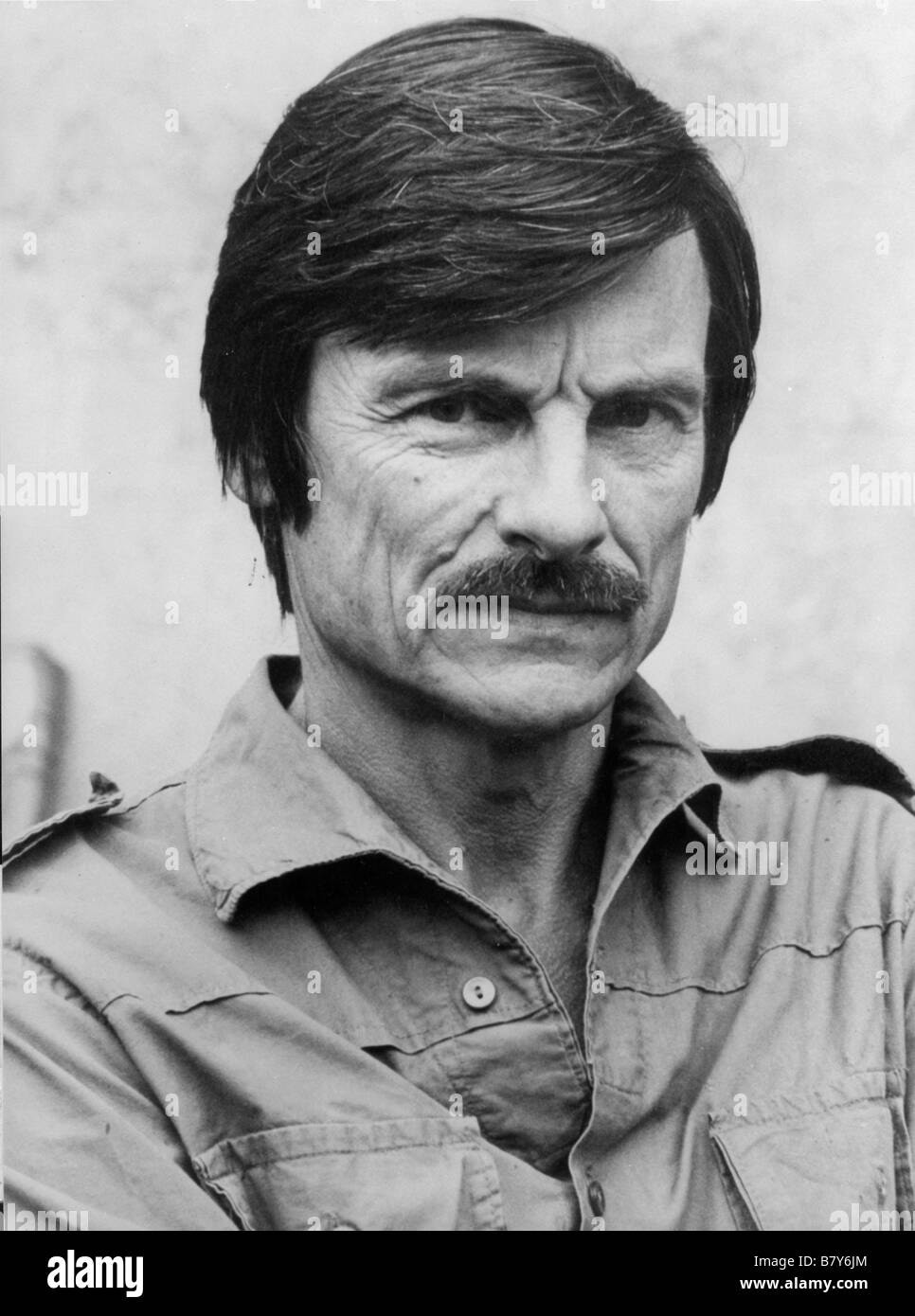
Andrei Tarkovsky
 Russia
Film director•screenwriter•film theorist
Geburtstag
April 4, 1932
Sternzeichen
Aries
Geburtsort
Zavrazhye, Ivanovo Oblast, Russian SFSR, Soviet Union
Alter
Gestorben mit 54
Größe
5 ft 9 in (175 cm)
Über
Andrei Tarkovsky was one of cinema's most revered directors, a Soviet-born artist whose seven feature films and one documentary transformed how we think about time, memory, and spirituality on screen. His work, marked by impossibly long takes, elemental imagery of rain and fire, and a deep, almost liturgical patience, feels less like storytelling and more like prayer. Films such as Stalker, Solaris, and Mirror are not just watched; they are inhabited. Today, Tarkovsky's influence spans from arthouse theaters to Hollywood auteurs like Christopher Nolan and Terrence Malick. His book Sculpting in Time remains a foundational text for filmmakers worldwide. In 2012, Sight & Sound placed three of his films on its list of the 100 greatest movies ever made, a feat matched by very few directors. Though he died in 1986, his estate, managed by his son and the Tarkovsky Foundation, continues to license his films for restoration and festival retrospectives, keeping his vision alive for new generations.
Frühes Leben & Hintergrund
Tarkovsky wuchs im ländlichen Dorf Zavrazhye auf, wo sein Vater, der Dichter Arseny Tarkovsky, oft abwesend war. Seine Eltern ließen sich scheiden, als er ein Kind war – ein Ereignis, das seine emotionale Landschaft dauerhaft prägte. Er zog mit seiner Mutter Maria Vishnyakova, einer Übersetzerin, nach Moskau und besuchte die Musikschule, wo er Klavier lernte. Er studierte auch Arabisch am Institut für Orientalische Sprachen, fand aber keine wahre Berufung. 1954 schrieb er sich am Allunions-Staatlichen Institut für Kinematographie (WGIK) ein, der führenden Filmschule der Sowjetunion, und studierte unter dem gefeierten Regisseur Mikhail Romm. Romm erkannte Tarkovskys ungewöhnliches Talent und gab ihm Raum, seine eigene Stimme zu entwickeln. Sein Diplomfilm The Steamroller and the Violin (1961), ein Kurzfilm über einen Jungen und einen Bauarbeiter, gewann den ersten Preis beim New York Student Film Festival. Dieser kleine Sieg öffnete die Tür zu seinem ersten Spielfilm.
Karriereentwicklung
Tarkovskys Debütfilm Ivan's Childhood (1962) gewann den Goldenen Löwen in Venedig und katapultierte ihn sofort auf die Weltbühne. Es folgte Andrei Rublev (1966), ein ausladendes Epos über den mittelalterlichen Ikonenmaler, das die sowjetischen Behörden fünf Jahre lang zurückhielten. Solaris (1972) gewann den Grand Prix Spécial in Cannes, obwohl Tarkovsky den Schnitt des Studios ablehnte. Mirror (1975) war eine radikale, nichtlineare Erinnerung, die die Zensoren verwirrte, aber später zu einem Meilenstein wurde. Stalker (1979) trieb seinen Stil bis zum Äußersten: eine langsame, philosophische Reise durch eine verbotene Zone. Nach Stalker setzte sich Tarkovsky in den Westen ab und drehte Nostalghia (1983) in Italien und The Sacrifice (1986) in Schweden. The Sacrifice gewann den Grand Prix in Cannes und einen BAFTA als bester fremdsprachiger Film. 1986 veröffentlichte er Sculpting in Time, seine grundlegende Abhandlung über das Kino. Er starb später im selben Jahr an Krebs, der wahrscheinlich durch giftige Chemikalien am Set von Stalker verschlimmert wurde.
Karriereverlauf
Öffentliches Bild & Stil
Tarkovsky wird oft als der spirituellste Filmemacher der Filmgeschichte bezeichnet. Sein charakteristischer Stil – extrem lange Einstellungen, natürliche Geräusche und Bilder von Wasser, Feuer und zerfallenden Ruinen – schafft eine hypnotische, meditative Erfahrung. Fans, manchmal Tarkovskianer genannt, versammeln sich online, um jedes Bild zu analysieren, und die Criterion-Collection-Ausgaben seiner Filme werden geschätzt. Medienporträts betonen seinen Status als Märtyrer der sowjetischen Zensur und als Dichter der Zeit. Seine Social-Media-Präsenz lebt durch Fan-Accounts, die sein Werk mit fast religiöser Ehrfurcht behandeln.
Ruhm & Fandom
Global attention for Andrei Tarkovsky remains steady across a century of cinematic history, anchored by the enduring influence of his seven feature films and theoretical writings. According to the iFANN Global Fame Rankings, he holds the position of the 10th most famous person from Russia, a placement that has held steady since the previous cycle. This standing reflects a consistent flow of scholarly engagement and cultural consumption rather than fleeting viral moments. While no formal organization unites his admirers, a decentralized network of cinephiles, film students, and academic circles sustains his legacy through university screenings and critical analysis. These devotees, often referred to as Tarkovsky fans or simply cinephiles, operate without the structured activism seen in modern pop culture, preferring instead to dissect the spiritual and temporal dimensions of his work. The absence of a specific moniker for this group underscores the intellectual nature of their reverence, which focuses on the preservation of his films via institutions like The Criterion Collection rather than commercial campaigns. His status as a poet of time ensures that his image persists not through celebrity gossip but through the quiet, profound realization experienced by viewers encountering his slow pacing and elemental imagery.
Interessante Fakten und Legenden
Before dedicating himself to cinema, Tarkovsky studied Arabic and music, disciplines that informed his later visual rhythms. He famously refused to watch his own completed films, asserting they belonged entirely to the audience. His father's poetry is recited within both Mirror and Nostalghia, weaving personal history into the narrative fabric. During production, he was a heavy smoker who consumed strong black tea constantly. He named his dog Pata after a character in Nostalghia and once stated that if forced to save only one film from destruction, he would choose Mirror. Beyond these biographical details, a persistent legend surrounds his forced exile from the Soviet Union; denied permission to film about Tolstoy, he left the country under political pressure to direct Nostalghia in Italy, cementing his image as an artist defying totalitarianism. Another widely retold story concerns his final resting place: although he wished to be buried near his mother in Nice, France, his body remained there until 2009, when a long legal struggle finally allowed his family to inter him at Moscow's Novodevichy Cemetery.
Bemerkenswerte Zitate
“The allotted function of art is not, as is often assumed, to put across ideas, to propagate thoughts, to serve as an example. The aim of art is to prepare a person for death, to plough and harrow his soul, rendering it capable of turning to good.”
“The cinema is an art form that is not about something, it is something.”
“I am interested in the inner world of a person, and it is quite natural that the cinema, which is capable of penetrating into the deepest recesses of the human soul, should be the art form that can express the most intimate experiences.”
“The film is not a sequence of images, but a sequence of time.”
“I don't make films for the audience. I make them for myself. If the audience likes them, that's fine.”
Familie & Privatleben
Tarkovskys Vater, Arseny Tarkovsky, war ein gefeierter Dichter, dessen Werk in den Filmen seines Sohnes erscheint. Seine Mutter, Maria Vishnyakova, war eine Übersetzerin, die ihn nach der Scheidung großzog. Er hatte zwei Söhne: Arseny (geb. 1962) mit seiner ersten Frau Irma Raush und Mikhail (geb. 1971) mit seiner zweiten Frau Larisa Tarkovskaya. Mikhail ist Schriftsteller und Umweltschützer und lebt in Sibirien. Das spirituelle und intellektuelle Umfeld der Familie prägte Tarkovskys künstlerische Vision maßgeblich.
Bemerkenswerte Verbindungen
Zu Tarkovskys wichtigsten Mitarbeitern gehören sein Vater, der Dichter Arseny Tarkovsky, dessen Verse in Mirror und Nostalghia vorkommen; sein Lehrer Mikhail Romm; die Kameramänner Georgy Rerberg (Mirror, Stalker) und Vadim Yusov (Ivan's Childhood, Andrei Rublev); der Komponist Eduard Artemyev (Solaris, Mirror, Stalker); sowie die Schauspieler Anatoly Solonitsyn, Margarita Terekhova und Erland Josephson.
Beziehungen & Dating-Vergangenheit
Tarkowski heiratete 1957 die Schauspielerin Irma Rausch. Sie spielte in seinem Kurzfilm Die Walze und die Geige und in Iwan Kindheit mit. 1962 bekamen sie einen Sohn, Arseni, und ließen sich 1970 scheiden. Im selben Jahr heiratete er Larissa Kizilova (später Tarkowskaja), die ab Spiegel als Script Supervisor und Cutterin an allen seinen Filmen arbeitete. 1971 bekamen sie einen Sohn, Michail. Tarkowski blieb bis zu seinem Tod 1986 mit Larissa verheiratet; sie starb 1998.
- VerheiratetIrma Raush1957 - 19701957 geheiratet; sie spielte in seinen frühen Filmen mit; sie bekamen einen Sohn, Arseni; Scheidung 1970.
- VerheiratetLarisa Tarkovskaya1970 - 19861970 geheiratet; sie arbeitete ab Spiegel als Script Supervisor und Cutterin an allen Filmen; sie bekamen einen Sohn, Michail; bis zu seinem Tod verheiratet.
Tod und Nachwirkungen
Gestorben
December 29, 1986 (im Alter von 54 Jahren)
Sterbeort
Paris, Île-de-France, France
Todesursache
Lung cancer complications
Andrei Arsenyevich Tarkovsky passed away on December 29, 1986, in Paris, France, following a long struggle with lung cancer that had been confirmed by medical professionals prior to his death. The director had traveled to the French capital earlier that year to undergo surgery for the condition after being denied permission to remain in the Soviet Union due to his political stance and the controversial nature of his films. His final public appearance is generally considered to be the completion of his last film, The Sacrifice (Offret), which premiered at Cannes in May 1986, after which he continued post-production work while his health declined until his passing. Public reaction within the international cinema community was marked by widespread mourning, with tributes pouring in from peers and institutions who recognized him as one of the greatest directors in history.
Although immediate large-scale fan vigils were limited by the geopolitical context of the late Soviet era, the decades following his death saw an exponential growth in his influence, leading to numerous retrospectives and academic studies. His funeral took place on January 3, 1987, in Paris as a private affair attended by close friends, family, and colleagues, including his wife Larisa Tarkovskaya and his son Andrey Tarkovsky Jr., where he was cremated and his ashes interred at the Cimetière de Montmartre. Posthumously, Tarkovsky's estate has been managed by his family to ensure the preservation and distribution of his works, with several films receiving critical re-evaluations and restorations.
Vermögen (Nachlasswert)
$1.5 Million
Schätzung der iFANN-Redaktion
Since Andrei Tarkovsky passed away, his net worth represents the current value of his estate. No official public figure manages the assets directly, but the estate, overseen by his son Mikhail and the Tarkovsky Foundation, generates steady revenue through royalties from his seven feature films, streaming agreements with the Criterion Channel and Kanopy, home video sales including Criterion Collection box sets, and licensing for festival screenings. Income also flows from his book Sculpting in Time and published diaries such as Time Within Time. Per iFANN's editorial analysis, the estate is estimated at approximately $1.5 million as of 2026, based on modest but consistent earnings from classic film rights and intellectual property.
Gewonnene Auszeichnungen (28)
Tarkowski gewann den Goldenen Löwen in Venedig für Iwan Kindheit und den Großen Preis der Jury für Solaris in Cannes. Sein letzter Film, Opfer, erhielt den Großen Preis der Jury in Cannes und einen BAFTA als bester fremdsprachiger Film. Er bekam auch den Spezialpreis der Jury in Venedig für Andrej Rubljow und teilte sich den Preis für die beste Regie in Cannes für Nostalghia. 1990 wurde ihm posthum der Leninpreis verliehen, eine der höchsten Auszeichnungen der Sowjetunion.
1988 · Bester fremdsprachiger Film
The Sacrifice
1987 · für The Sacrifice
Bekannt für
Stalker
1979 · Director, Screenwriter
Solaris
1972 · Director, Screenwriter
Andrei Rublev
1966 · Director, Screenwriter
Mirror
1975 · Director, Screenwriter
The Sacrifice
1986 · Director, Screenwriter
Schlagwörter
Kurzfakten
- Beruf
- Film director, screenwriter, film theorist
- Geboren
- April 4, 1932
- Geburtsort
- Zavrazhye, Ivanovo Oblast, Russian SFSR, Soviet Union
- Gestorben
- December 29, 1986
- Sterbeort
- Paris, France
- Geschlecht
- Männlich
- Größe
- 5 ft 9 in (175 cm)
- Ehepartner
- Irma Raush (1957–1970), Larisa Tarkovskaya (1970–1986)
- Children
- 2 sons: Arseny and Mikhail
- Education
- All-Union State Institute of Cinematography (VGIK)
- Sternzeichen
- Aries
Persönliche Details
- Vollständiger Name
- Andrei Arsenyevich Tarkovsky
- Größe
- 5 ft 9 in (175 cm)
- Ehepartner
- Irma Raush (1957–1970), Larisa Tarkovskaya (1970–1986)
- Kinder
- Arseny Tarkovsky (born 1962), Mikhail Tarkovsky (born 1971)
- Bildung
- All-Union State Institute of Cinematography (VGIK), studied under Mikhail Romm
Filmografie
8
Gesamt
7
Film
0
TV
Häufig gestellte Fragen
Wie alt war Andrei Tarkowski, als er starb?
Wie hoch ist Andrei Tarkowskis Vermögen?
Hatte Andrei Tarkowski Kinder?
Was ist Andrei Tarkowskis berühmtester Film?
War Andrei Tarkowski religiös?
Der Community beitreten
Fans diskutieren