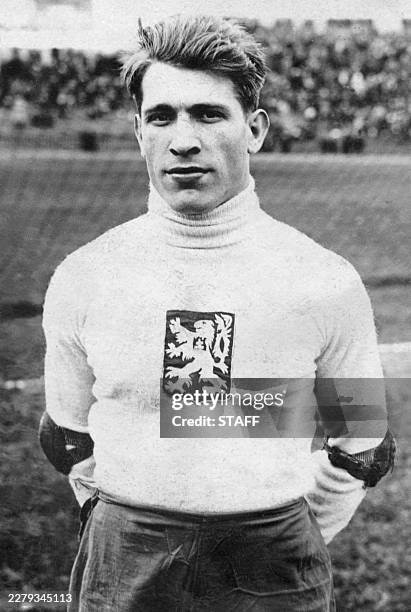
František Plánička
 Czechia
Geburtstag
June 2, 1904
Sternzeichen
Gemini
Geburtsort
Prague, Austria-Hungary (now Czech Republic)
Alter
Gestorben mit 92
Größe
1.72 m (5 ft 8 in)
Über
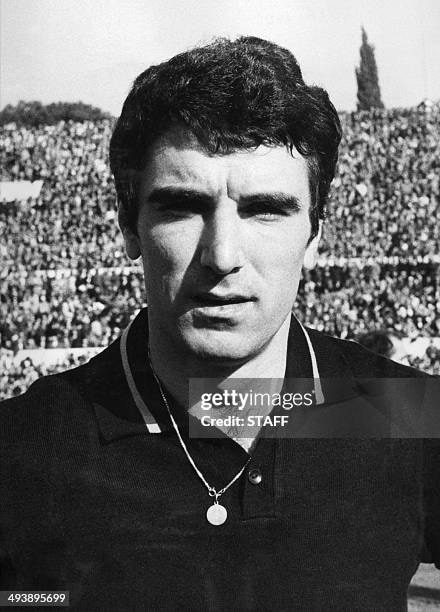
František Plánička was a Czech former football goalkeeper, widely considered one of the greatest players in Czechoslovak football history and among the finest goalkeepers of the pre-World War II era. He spent his entire 16-year senior career at Slavia Prague, where he won eight Czechoslovak First League titles and the Mitropa Cup, the most prestigious club competition in Central Europe at the time. His 73 caps for the Czechoslovakia national team included captaining the side to the 1934 World Cup final, where he famously played with a broken collarbone. Plánička never received a yellow or red card in his entire career, a testament to his extraordinary sportsmanship. His legacy endures through statues, museum exhibits, and a documentary produced by Czech Television in 2025. He is revered as a national hero and a symbol of fair play.
Frühes Leben & Hintergrund
Plánička wuchs im Arbeiterbezirk Žižkov in Prag auf, wo sein Vater als Hilfsarbeiter arbeitete. Die Familie lebte bescheiden, und als Kind spielte er auf der Straße mit einem Lumpenball Fußball, wobei er die Reflexe und Beweglichkeit entwickelte, die seine Karriere prägen sollten. Er besuchte örtliche Schulen, verließ die formale Bildung jedoch früh, um eine Lehre als Schlosser zu absolvieren, seinem ersten Beruf, bevor Fußball zu seinem Beruf wurde. Sein organisierter Fußball begann als Teenager bei lokalen Vereinen, zunächst bei der Jugendmannschaft von SK Žižkov, wo sein Torwarttalent hervortrat, dann 1921 bei SK Bubeneč, wo er zunächst als Feldspieler spielte, bevor er sich im Tor etablierte. Sein Durchbruch kam 1923, als er im Alter von 19 Jahren zu Slavia Prag wechselte, noch in derselben Saison sein Profidebüt gab und sich schnell als Stammtorhüter des Vereins etablierte.
Karriereentwicklung
Pláničkas erster tschechoslowakischer Meistertitel kam 1926, was eine Periode nationaler Dominanz einleitete, in der Slavia Prag im folgenden Jahrzehnt acht Meistertitel gewann. Sein Länderspieldebüt gab er am 17. Januar 1926 in einem Freundschaftsspiel gegen Italien, einer 1:3-Niederlage, aber er sollte 73 Länderspiele absolvieren, ein tschechoslowakischer Rekord, der jahrzehntelang Bestand hatte. Bei der FIFA-Weltmeisterschaft 1934 in Italien führte er die Tschechoslowakei als Kapitän ins Finale. Zu Beginn des Spiels gegen Italien erlitt er einen Schlüsselbeinbruch, weigerte sich jedoch, das Feld zu verlassen, da Auswechslungen nicht erlaubt waren. Er spielte weiter und hielt mehrere Schüsse, bevor die Tschechoslowakei nach Verlängerung mit 1:2 verlor. Sein Mut wurde legendär. 1938 gewann Plánička mit Slavia Prag den Mitropapokal, indem er im Finale Ferencváros besiegte. Im selben Jahr führte er die Tschechoslowakei bei der Weltmeisterschaft in Frankreich als Kapitän ins Viertelfinale. Im Spiel gegen Brasilien, das aufgrund seiner Härte als Schlacht von Bordeaux bekannt wurde, brach er sich den Arm, spielte aber erneut weiter. Der Ausbruch des Zweiten Weltkriegs und die nationalsozialistische Besetzung der Tschechoslowakei beendeten effektiv den Spitzenfußball auf internationaler Ebene, und Plánička trat 1939 im Alter von 35 Jahren zurück, nachdem er seine gesamte Profikarriere bei Slavia Prag verbracht hatte. Nach dem Ruhestand arbeitete er als Fußballfunktionär und später als bescheidener Hausmeister im Stadion von Slavia.
Karriereverlauf
Öffentliches Bild & Stil
Pláničkas öffentliches Bild ist das des archetypischen Gentleman-Torwarts: ein Symbol für Sportlichkeit, Mut und Loyalität. Er trug ein schlichtes dunkles Trikot ohne Handschuhe, was für die damalige Zeit Standard war, und war bekannt für seine akrobatischen Paraden, schnellen Reflexe und ruhige Autorität. Tschechische Medien bezeichnen ihn durchgängig als legendären Torwart und ehrenhaften Sportler. Die Fans von Slavia Prag singen regelmäßig Gesänge zu seinen Ehren, und seine Statue vor der Eden Arena ist ein Wallfahrtsort. Zum Jahrestag des WM-Finales 1934 legen Fans Blumen nieder. Die offiziellen Social-Media-Kanäle des Vereins verwenden einen respektvollen, historischen Ton, wenn sie über ihn posten, oft mit Schwarz-Weiß-Fotos und dem Hashtag #legend.
Ruhm & Fandom (iFAMOUS Rankings)
František Plánička remains a towering figure in Czechoslovak football history, revered not for modern digital engagement but as a foundational national icon whose legacy is anchored in documented professional achievements rather than active fan communities. While contemporary structures such as organized fan clubs, social media campaigns, or ritualistic gatherings do not exist for him, a consequence of his status as a historical figure who passed away in 1996 and played during the interwar period, he commands a quiet, enduring respect among those familiar with the sport's origins. His reputation rests on being elected the best Czech goalkeeper ever by the International Federation of Football History & Statistics in 1999, a distinction that cements his place in sports mythology alongside his 73 international caps and two World Cup appearances. The narrative surrounding him focuses on stoic courage and unblemished sportsmanship, with fans occasionally citing his refusal to wear gloves as a symbol of direct connection to the game, though no formal fandom name has ever been documented. There are no records of birthday billboards, streaming pushes, or charity drives specifically organized in his honor, reflecting his position as a revered elder statesman of the pitch rather than a celebrity with an active, organized following. iFANN has evaluated this profile within its Global Fame Engine, which assesses individuals based on global media coverage, search signals, and consumption patterns worldwide. František Plánička is currently the EVALUATED_UNRANKED person in the world, holding no placement in the published Global Top 1,000 or any Top-100 scope list.
Interessante Fakten und Legenden
František Plánička maintained an unblemished disciplinary record throughout his sixteen-year senior career, never receiving a yellow or red card, a feat of extraordinary sportsmanship for any goalkeeper. He demonstrated remarkable resilience by playing the 1934 World Cup final with a broken collarbone and the 1938 World Cup quarter-final with a broken arm, refusing to leave the field either time. Before and during his professional football career, he worked as a locksmith, and after retiring from the sport, he returned to manual labor as a caretaker and groundskeeper at Slavia Prague's stadium. He holds the distinction of being the first player to captain Czechoslovakia at a World Cup, leading the side to the 1934 final where his leadership was widely praised. His 73 international caps stood as a national record for decades. A persistent story among Czech football historians recounts how fans still revere his calm authority, often citing his refusal to wear gloves as a symbol of his direct connection to the game. This narrative of stoic courage is frequently retold alongside accounts of his longevity, having lived to be 92 years old and witnessing the transformation of football from its amateur roots to the modern era. In 1999, the International Federation of Football History & Statistics elected him the best Czech goalkeeper ever and ranked him sixth globally among goalkeepers, a formal accolade that solidified his legendary status decades after his retirement.
Bemerkenswerte Zitate
“I could not leave the field. My country needed me. The pain was nothing compared to the honour of representing Czechoslovakia.”
“A goalkeeper must be brave, but he must also be fair. The goal is to stop the ball, not to hurt the opponent. I never wanted to win by cheating.”
“I was lucky to play for Slavia. It was my home. I never wanted to leave. Why would I? They gave me everything.”
“The game has changed so much. The money, the tactics, the gloves. But the heart of football is still the same, the joy of a good save, the roar of the crowd.”
Familie & Privatleben
Plánička heiratete Marie Pláničková in den späten 1920er Jahren. Sie war seine lebenslange Partnerin und unterstützte seine Fußballkarriere. Sie hatten zwei Kinder: einen Sohn, František Plánička Jr., und eine Tochter, deren Name nicht weit verbreitet ist. Marie starb vor ihm. Nach ihrem Tod blieb Plánička verwitwet und lebte ruhig in Prag. Er galt als hingebungsvoller Familienmensch, der in seinem Privatleben die öffentliche Aufmerksamkeit mied.
Bemerkenswerte Verbindungen
Plánička spielte in den 1930er Jahren bei Slavia Prag zusammen mit Josef Bican, dem legendären Torschützen. Er teilte sich den Platz auch mit Oldřich Nejedlý, dem Torschützenkönig der WM 1934, und Antonín Puč, einem Flügelspieler für Slavia und die Tschechoslowakei. Weitere bemerkenswerte Teamkollegen sind Rudolf Krčil und Karel Pešek.
Beziehungen & Dating-Vergangenheit
Plánička heiratete Marie Pláničková in den späten 1920er Jahren. Sie war seine lebenslange Partnerin und unterstützte seine Fußballkarriere durchgehend. Das Paar hatte zwei Kinder. Marie starb vor ihm, und nach ihrem Tod blieb Plánička verwitwet. Es gibt keine glaubwürdigen Berichte über romantische Beziehungen nach dem Tod seiner Frau. Zum Zeitpunkt seines eigenen Todes im Jahr 1996 war er verwitwet.
- VerheiratetMarie Pláničková1928 - heuteHeiratete in den späten 1920er Jahren; hatte zwei Kinder; sie starb vor ihm.
Tod und Nachwirkungen
Gestorben
July 20, 1996 (im Alter von 92 Jahren)
Sterbeort
Prague
Todesursache
Unbekannt
Four years after his passing, the International Federation of Football History and Statistics elected František Plánička the best Czech goalkeeper of all time in 1999, ranking him sixth globally and cementing his status as a historical benchmark for the position. This posthumous recognition arrived quietly, reflecting a career that had long been defined by its absence from the modern commercial spotlight rather than any sudden resurgence of fame. The man who once captained Czechoslovakia to the 1934 World Cup final while playing with a broken collarbone passed away on July 20, 1996, at the age of 92. He died in Prague, the city where he was born and where he spent his entire life, though the specific location of his death remains unrecorded in public archives.
Given his advanced age, the event was treated as a natural conclusion to a long life, devoid of controversy or dramatic circumstance. His widow Marie had predeceased him many years prior, leaving him widowed during his final decades. While he worked as a locksmith and stadium caretaker after retiring from football, his estate matters were not subject to public record or media scrutiny. The legacy that followed his death was one of steady reverence rather than immediate fanfare, preserved through statistical databases and historical retrospectives that continue to cite his performance in the Battle of Bordeaux and his flawless disciplinary record.
Vermögen (Nachlasswert)
$1 Million
Schätzung der iFANN-Redaktion
As a footballer in the pre-war era, Plánička earned modest wages typical of the time. His primary income came from his club salary at Slavia Prague and small national team match fees. He had no major endorsement deals, as the commercial era of football had not yet begun. After retirement, he worked as a locksmith and later as a stadium caretaker, earning a humble living. Since his death in 1996, his estate generates modest income from posthumous licensing of his image and name for Czech football memorabilia, royalties from biographical books and documentaries, and use of his name in Slavia Prague museum exhibits. Per iFANN's editorial analysis, the estimated value of his estate is approximately $1 Million as of 2026, based on historical football memorabilia valuations.
Gewonnene Auszeichnungen (11)
Plánička gewann mit Slavia Prag zwischen 1926 und 1935 acht tschechoslowakische Meistertitel und 1938 den Mitropa-Pokal. Mit der Tschechoslowakei wurde er Vizeweltmeister bei der FIFA-Weltmeisterschaft 1934. Seine Ära liegt vor modernen Einzelauszeichnungen wie dem Ballon d'Or, aber er wurde posthum mit Aufnahmen in die Ruhmeshalle von Slavia Prag und die Ruhmeshalle des Tschechischen Fußballverbandes geehrt.
1938 · Gewinner
Slavia Prague
1934 · Vizeweltmeister
Czechoslovakia national team
Bekannt für
Slavia Prague
1923 · Torwart
Czechoslovakia National Team
1926 · Captain and Goalkeeper
1934 FIFA World Cup
1934 · Captain (runners-up)
1938 FIFA World Cup
1938 · Captain (quarter-finals)
Schlagwörter
Kurzfakten
- Beruf
- Fußballspieler
- Geboren
- +1904-06-02
- Geburtsort
- Prague
- Gestorben
- +1996-07-20
- Sterbeort
- Prague
- Geschlecht
- Männlich
- Sternzeichen
- Gemini
Persönliche Details
- Vollständiger Name
- František Plánička
- Größe
- 1.72 m (5 ft 8 in)
- Ehepartner
- Marie Pláničková
- Kinder
- František Plánička Jr. (son), one daughter (name not widely reported)
- Bildung
- Left school early; apprentice locksmith
Häufig gestellte Fragen
Wie alt war František Plánička, als er starb?
Hat František Plánička jemals eine rote Karte bekommen?
Wie viele Länderspiele hatte František Plánička?
Für welchen Verein spielte František Plánička?
Hat František Plánička die Weltmeisterschaft gewonnen?
Ähnliche Personen
Der Community beitreten
Fans diskutieren