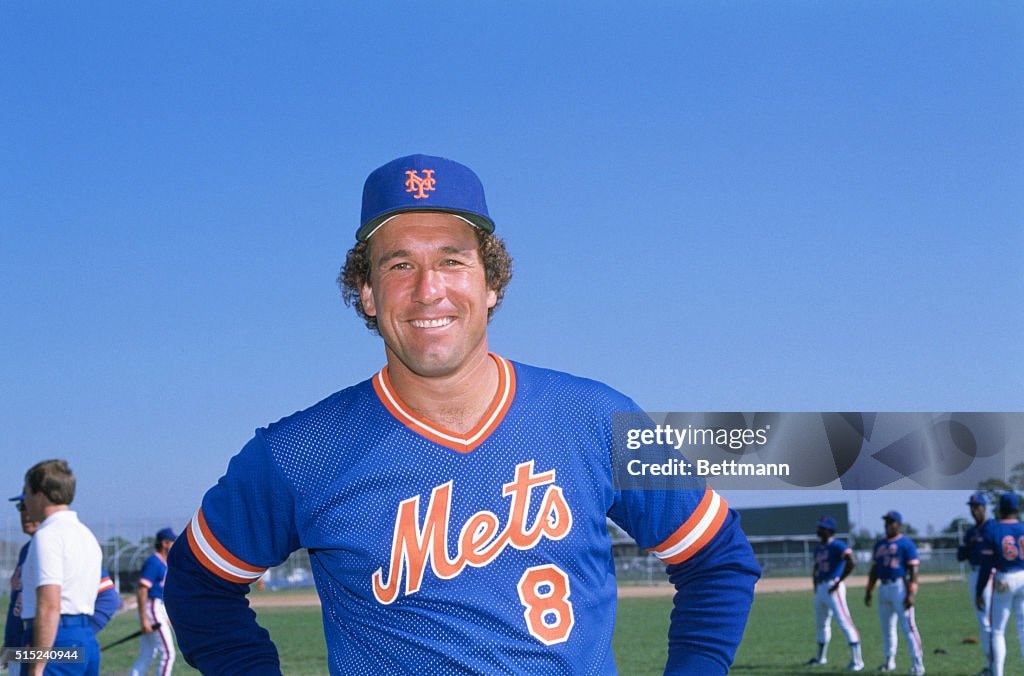
Gary Carter
 United States
Also known as: The Kid
Geburtstag
April 8, 1954
Sternzeichen
Aries
Geburtsort
Culver City, California, United States
Alter
Gestorben mit 57
Größe
6 ft 2 in (188 cm)
Über
Gary Carter war ein US-amerikanischer professioneller Baseball-Catcher, der 19 Spielzeiten in der Major League Baseball spielte, hauptsächlich für die Montreal Expos und New York Mets. Mit 11 All-Star-Nominierungen war er bekannt für sein kraftvolles Schlagen, seine starken defensiven Fähigkeiten und seine überschwängliche Persönlichkeit, die ihm den Spitznamen „The Kid“ einbrachte. Carter wurde 2003 in die National Baseball Hall of Fame aufgenommen und festigte damit sein Vermächtnis als einer der größten Catcher der Baseballgeschichte.
Zu seinen Karrierehöhepunkten zählen 324 Homeruns und 1.225 RBIs, und er war eine Schlüsselfigur beim dramatischen World-Series-Sieg der Mets 1986. Abseits des Diamanten war Carter ein frommer Christ und Motivationsredner, der für seine Führungsqualitäten und Sportlichkeit respektiert wurde.
Frühes Leben & Hintergrund
Gary Edward Carter wurde am 8. April 1954 in Culver City, Kalifornien, geboren und wuchs im Großraum Los Angeles auf. Er zeigte früh sportliches Talent und gewann 1961 im Alter von sieben Jahren den ersten Punt-, Pass- und Kick-Wettbewerb. Carter besuchte die Sunny Hills High School in Fullerton, wo er sowohl im Baseball als auch im Football herausragte und als Quarterback und Defensive Back spielte. Sein Baseballtalent zeigte sich als Catcher und Outfielder, und er wurde direkt nach der High School in der dritten Runde des MLB-Drafts 1972 von den Montreal Expos ausgewählt. Er verbrachte zwei Spielzeiten in den Minor Leagues, um seine Fähigkeiten zu verfeinern, bevor er 1974 sein MLB-Debüt gab.
Karriereentwicklung
Carter gab sein MLB-Debüt bei den Montreal Expos am 16. September 1974. Er etablierte sich schnell als herausragender Catcher und gewann 1975 seinen ersten Silver Slugger Award. Defensiv gewann er 1979 seinen ersten Gold Glove. 1980 wurde er nach einer starken Postseason-Leistung zum NLCS MVP ernannt. Nach der Saison 1984 wurde er von den Expos zu den New York Mets transferiert, wo er zu einem Eckpfeiler des Teams wurde. 1985 erzielte er mit 32 Homeruns und 100 RBIs Karrierebestwerte. Der Höhepunkt kam 1986, als er dazu beitrug, die Mets zum World-Series-Titel zu führen, und im fünften Spiel einen entscheidenden Homerun schlug. Später spielte er für die Los Angeles Dodgers, San Francisco Giants und Baltimore Orioles, bevor er 1992 zurücktrat.
Karriereverlauf
Öffentliches Bild & Stil
Carter galt weithin als einer der enthusiastischsten und charismatischsten Spieler seiner Ära. Sein ansteckendes Lächeln und sein energisches Spiel machten ihn zu einem Fanliebling. Er war für seine Führungsqualitäten auf dem Feld bekannt, wo er oft die Spiele ansagte und die Pitcher führte. Medien und Teamkollegen lobten seine Arbeitsmoral und Beständigkeit, da er über 1.000 Spiele fing. Sein Glaube war ein zentraler Bestandteil seiner öffentlichen Persona, und er sprach häufig über die Bedeutung von Familie und Religion.
Ruhm & Fandom
The fanbase surrounding Gary Carter does not operate under a formal collective name, identifying instead through allegiance to the Montreal Expos or New York Mets rather than as a distinct sub-group. This lack of a specific moniker has not diminished the intensity with which supporters guard his legacy, a sentiment made starkly clear in May 2026 when the assignment of his retired number 8 to rookie Nick Morabito triggered immediate and visceral backlash. The organization swiftly reversed the decision, demonstrating that while no official fandom exists, the public acts as an active guardian of the catcher's history. Within this sphere, Carter remains a central figure in franchise mythology, revered for his approachable demeanor and the enduring nickname "The Kid" earned during his debut at age nineteen. His cultural standing is anchored by verified historical achievements, most notably his clutch performance in the 1986 World Series where he helped secure a victory against the Boston Red Sox, cementing his status as a legendary defender known for his rock-solid presence behind home plate. Despite his immense stature in baseball history, iFANN's Global Fame Engine evaluated his current standing in August 2026 and determined that he holds no placement in the published rankings. Gary Carter is currently EVALUATED_UNRANKED within the Global Top 1,000 or any Top-100 scope list. While his influence on the sport remains profound, drawing tributes from across the league following his passing in 2012, he does not currently occupy a quantified position in the global fame hierarchy. The absence of a numeric rank reflects a status where his historical impact is absolute, yet his contemporary viral metrics do not align with the thresholds required for a specific ordinal placement in the current cycle.
Interessante Fakten und Legenden
Gary Carter's career was marked by distinctive habits and historic firsts that remain part of baseball lore. He was the inaugural winner of the Punt, Pass, and Kick contest and frequently played golf in charity tournaments after his retirement. On the field, he was recognized for wearing a unique catcher's mask equipped with a throat protector and famously caught Bill Stoneman's no-hitter in 1974. His broadcasting career included a stint with the Florida Marlins, where he shared his insights before focusing on motivational speaking. The origin of his beloved nickname, "The Kid," is tied to his youthful energy upon joining the Montreal Expos in 1973, a moniker popularized by announcer Bob Murphy that stuck throughout his nineteen-season career. A defining moment in his legend occurred during the 1986 World Series, where his crucial home run and defensive plays in Game 6 became the primary narrative for fans recalling his contribution to the Mets' championship victory. Historians often describe him as a "rock behind home plate" due to his three Gold Glove Awards and ability to manage pitchers, traits that defined his reputation as one of the game's greatest catchers. Even decades later, the reverence for his legacy persists, evidenced by the swift correction when a rookie was mistakenly issued his number in 2026, proving that the stories of his life continue to resonate with new generations.
Bemerkenswerte Zitate
“I love the game. I love the fans. I love the challenge. I love the struggle. I love the whole thing.”
“My faith is the most important thing in my life. It's what gets me through all the tough times.”
Familie & Privatleben
Gary Carter heiratete Sandy Brubaker, und sie hatten vier Kinder: Christy, Kim, Tiffany und D.J. Sein Sohn D.J. Carter spielte Minor-League-Baseball in der Mets-Organisation. Carter war ein hingebungsvoller Familienmensch und schrieb seiner Frau oft zu, ihn in seiner Karriere unterstützt zu haben. Er war ein frommer Christ und besuchte regelmäßig die Kirche. Nach seinem Rücktritt lebte er in Palm Beach Gardens, Florida, bis zu seinem Tod.
Bemerkenswerte Verbindungen
Gary Carter wird oft mit dem World-Series-Team der New York Mets von 1986 in Verbindung gebracht, zusammen mit Teamkollegen wie Dwight Gooden, Darryl Strawberry und Keith Hernandez. Er hatte auch eine bemerkenswerte Rivalität mit Mike Schmidt von den Philadelphia Phillies. In Montreal war er eine Schlüsselfigur neben Steve Rogers und Andre Dawson.
Beziehungen & Dating-Vergangenheit
Gary Carter heiratete Sandy Brubaker im Jahr 1975. Das Paar hatte vier Kinder und blieb bis zu Carters Tod im Jahr 2012 verheiratet. Es sind keine früheren Beziehungen oder Scheidungen bekannt. Carter sprach oft öffentlich über seine starke Bindung zu seiner Frau und schrieb ihr seinen Erfolg zu. Die Ehe galt als stabil und privat.
- VerheiratetSandy Brubaker1975 - 2012Verheiratet bis zu Carters Tod; vier gemeinsame Kinder.
Tod und Nachwirkungen
Gestorben
February 16, 2012 (im Alter von 57 Jahren)
Sterbeort
Laval, Quebec, Canada
Todesursache
Complications from an astrocytoma
Gary Carter spent his final years residing in Laval, Quebec, Canada, where he lived with his family and maintained a quiet life away from the public eye. On February 16, 2012, at the age of 57, Carter passed away at his home following a private battle with an astrocytoma, a type of brain tumor diagnosed approximately one year prior. The cause of death was confirmed by his family and the Montreal Expos organization as natural complications arising from the malignancy. Tributes poured in immediately from Major League Baseball, the New York Mets, and fellow Hall of Famers like Mike Piazza and Keith Hernandez, who honored his leadership and distinctive persona.
Fans gathered spontaneously outside spring training facilities and near his residence to pay respects, while the number 8 jersey was retired by the Montreal Expos in recognition of his enduring impact on Canadian baseball. A private funeral service attended by close family and select colleagues took place shortly after his passing in Laval, though specific burial details remain undisclosed. Following his death, the Gary Carter Foundation continued its work supporting children's charities and youth baseball programs, while various documentaries and biographies were produced to document his legacy.
Vermögen (Nachlasswert)
$10 Million
Schätzung der iFANN-Redaktion
Per iFANN's editorial analysis, the estate of Gary Carter is valued at approximately $10 million as of 2026. During his playing days, particularly throughout the 1980s, Carter accumulated substantial earnings with a peak annual salary reaching around $2 million. Following his retirement, he expanded his income streams through work as a broadcaster and motivational speaker. The financial value of his estate includes residuals generated from memorabilia sales, autograph signings, and various licensing agreements. The Carter family actively manages his enduring legacy through the Gary Carter Foundation, which directs resources toward supporting charitable causes.
Gewonnene Auszeichnungen (10)
Gary Carter war 11-mal MLB All-Star, gewann drei Gold Glove Awards (1979, 1981, 1986) und fünf Silver Slugger Awards (1975, 1981, 1984, 1985, 1986). Er wurde 1980 zum NLCS MVP ernannt und 2003 in die National Baseball Hall of Fame aufgenommen.
2003 · Aufnahme
Career
1986 · Verteidigung
New York Mets
1981 · Verteidigung
Montreal Expos
1979 · Verteidigung
Montreal Expos
Bekannt für
Montreal Expos
1974 · Catcher
New York Mets
1985 · Catcher
1986 World Series Champion
1986 · Catcher
Schlagwörter
Kurzfakten
- Beruf
- Baseball Player
- Geboren
- 1954-04-08
- Geburtsort
- Culver City, California, United States
- Sternzeichen
- Aries
- Größe
- 6 ft 2 in (188 cm)
- Bats/Throws
- Right/Right
Persönliche Details
- Vollständiger Name
- Gary Edward Carter
- Größe
- 6 ft 2 in (188 cm)
- Ehepartner
- Sandy Brubaker
- Kinder
- Christy, Kim, Tiffany, D.J.
- Bildung
- Sunny Hills High School, Fullerton, California
Häufig gestellte Fragen
Wie lautete Gary Carters Spitzname?
Für welche Teams spielte Gary Carter?
Wann wurde Gary Carter in die Hall of Fame aufgenommen?
Hat Gary Carter eine World Series gewonnen?
Was war Gary Carters Todesursache?
Ähnliche Personen
Der Community beitreten
Fans diskutieren