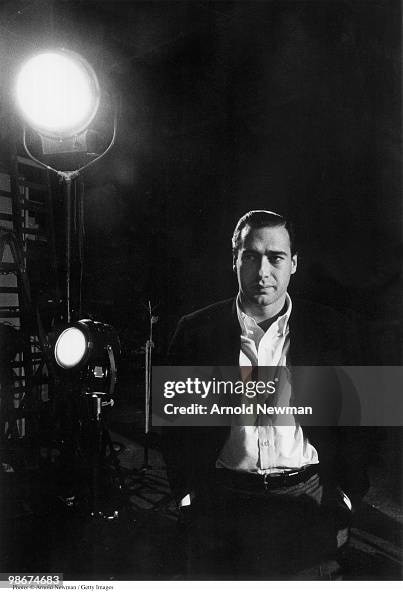
John Frankenheimer
 United States
film director•film producer•screenwriter
Geburtstag
February 19, 1930
Sternzeichen
Pisces
Geburtsort
Queens, New York, USA
Alter
Gestorben mit 72
Über
John Frankenheimer war ein US-amerikanischer Film- und Fernsehregisseur, der das Genre des politischen Thrillers prägte. Geboren am 19. Februar 1930 in Queens, New York, begann er im Live-Fernsehen, bevor er fast 40 Spielfilme und über 50 Fernsehspiele inszenierte. Seine Arbeit erforschte oft psychologische Dilemmata und politische Situationen, was Vergleiche mit Sidney Lumet hervorrief, für den er einst als Regieassistent arbeitete. Frankenheimer gewann in den 1990er Jahren vier Emmy Awards für Fernsehfilme wie Against the Wall, The Burning Season, Andersonville und George Wallace, wobei letzterer einen Golden Globe einbrachte. Er wurde 2002 in die Television Hall of Fame aufgenommen, kurz vor seinem Tod am 6. Juli 2002 im Alter von 72 Jahren.
Frühes Leben & Hintergrund
Frankenheimer wuchs in Queens als Sohn von Walter und Helen Frankenheimer auf. Im Alter von 10 Jahren lieh er sich eine Kamera und drehte seinen ersten Film, einen Kurzfilm über einen Zugraub. Er besuchte die Indiana University, wo er Englisch studierte und in Campus-Theaterproduktionen mitspielte. Während des Koreakrieges diente er in der US Air Force, wo er Trainingsfilme und Dokumentationen drehte. Diese Erfahrung führte 1953 zu einem Job bei CBS in New York. Er stieg schnell in die Live-Fernsehregie ein und arbeitete an Anthologieserien wie Kraft Television Theatre und Playhouse 90. Ende der 1950er Jahre hatte er über 100 Live-Übertragungen inszeniert und verfeinerte einen visuellen Stil, der Tiefenschärfe und lange Einstellungen nutzte, um Spannung zu erzeugen.
Karriereentwicklung
Frankenheimers Durchbruch kam 1962 mit The Manchurian Candidate, einem Kalter-Krieg-Thriller mit Frank Sinatra. Der Film war ein kritischer und kommerzieller Erfolg, gelobt für seine straffe Regie und seine vorausschauenden Themen. 1964 folgten zwei weitere Erfolge: Seven Days in May, ein politisches Verschwörungsdrama, und The Train, ein Actionfilm aus dem Zweiten Weltkrieg. 1966 veröffentlichte er Seconds, einen surrealen psychologischen Horror, und Grand Prix, ein ambitioniertes Rennepos, gedreht in Cinerama. In den 1970er Jahren inszenierte er French Connection II (1975) und Black Sunday (1977). Nach einem Tief in den 1980er Jahren belebte er seine Karriere mit gefeierten Fernsehfilmen in den 1990er Jahren, wobei er vier Emmys gewann. Sein letzter Kinofilm war Ronin (1998), ein Heist-Thriller, bekannt für seine Autojagden. Er starb 2002 nach Abschluss des HBO-Films Path to War.
Karriereverlauf
Öffentliches Bild & Stil
Frankenheimer wurde als Handwerker respektiert, der intelligente, spannende Filme drehte. Kritiker lobten seine Fähigkeit, durch visuelles Erzählen Spannung zu erzeugen, und seine Bereitschaft, politische und psychologische Themen anzugehen. Er war bekannt für einen anspruchsvollen, intensiven Regiestil, der Schauspieler forderte, aber ihre Loyalität gewann. Anders als viele Regisseure seiner Zeit betrachtete er das Fernsehen als Medium für ernsthafte Arbeit, besonders in den 1990er Jahren. Fans bewundern seine Klassiker der 1960er Jahre, und The Manchurian Candidate wird häufig als einer der besten Thriller aller Zeiten genannt. Er pflegte kein öffentliches Image außerhalb seiner Arbeit, sondern konzentrierte sich auf das Handwerk.
Ruhm & Fandom
John Frankenheimer remains a towering figure in cinema history, revered by cinephiles and scholars for his mastery of the political thriller and his pioneering work in television. While his name is instantly recognized by those who study film technique, iFANN's Global Fame Engine has evaluated this person, but they do not currently hold a placement in the published rankings (Global Top 1,000 or a Top-100 scope list). This absence from the global top tier reflects his status as a director's director rather than a pop culture icon whose fame relies on viral moments or mass-market celebrity. His reputation is built on the enduring power of films like The Manchurian Candidate and Grand Prix, which continue to be studied in academic circles and screened at retrospectives decades after their release.
The audience surrounding his legacy does not operate under a formal banner; there is no documented fanbase name, organized campaigns, or specific rituals that define his followers. Instead, admiration manifests through the preservation of his work and the ongoing discussion of his technical innovations. Fans of classic cinema often cite his ability to capture high-speed motion and psychological tension as reasons for his enduring relevance. Unlike modern celebrities who generate folklore through public chaos or interactive projects, Frankenheimer's legend is strictly one of professional achievement. His four consecutive Emmy Awards in the 1990s stand as a reflection of his skill during a time when many peers had abandoned television, cementing his place in the Television Hall of Fame. The stories told about him focus on his demanding directing style and his unique background as an amateur race car driver, which informed the visceral realism of his action sequences. There are no verified accounts of crowds disrupting events or fan-driven media spectacles; the narrative remains centered on his artistic contributions and the complex social dramas he translated into compelling cinema.
Interessante Fakten und Legenden
John Frankenheimer was an avid race car driver who owned several Porsches and competed in the 24 Hours of Daytona, using his driving experience to capture unprecedented velocity in Grand Prix. He served as an assistant director to Sidney Lumet early in his career before forging his own path. A close friend of Burt Lancaster, he collaborated with the actor on five films, including The Young Lions and The Train. On the set of The Island of Dr. Moreau in 1996, a famous clash occurred with Marlon Brando, who reportedly wore an ice bucket on his head between takes to manage his temperature. Frankenheimer's passion for trains began early; his first film at age 10 depicted a train robbery, foreshadowing his later masterpiece The Train.
A widely retold story in film circles highlights how his racing background directly influenced the camera work in Grand Prix, where he placed cameras inside moving vehicles to create a sense of speed that was revolutionary for its time. Another enduring piece of lore surrounds the production of The Manchurian Candidate, where his innovative editing techniques and prescient political themes have become a cornerstone of cultural mythology, frequently referenced in academic discussions. These professional anecdotes form the core of his legend, distinguishing him from directors known for personal scandals or crowd disruptions. His legacy is defined by these verified achievements and the intense loyalty he inspired in actors like Lee Marvin and Jeff Bridges.
Bemerkenswerte Zitate
“I'm not interested in making films about the human condition. I'm interested in making films about the human condition under pressure.”
“The Manchurian Candidate was a film about paranoia, and it tapped into the anxieties of the time. It still resonates because those anxieties haven't gone away.”
“Live television was the best training a director could have. You learned to think on your feet.”
“I love the process of filmmaking. The collaboration, the tension, the discovery.”
Familie & Privatleben
Frankenheimers Eltern waren Walter und Helen Frankenheimer. Er hatte eine jüngere Schwester, Mary. Seine erste Ehe mit der Schauspielerin Evelyn Ward wurde geschieden. 1964 heiratete er die Schauspielerin Evans Evans, die in mehreren seiner Filme auftrat. Sie hatten vier Kinder: Christine, John, Michael und Elise. Die Familie lebte in Los Angeles und Malibu. Frankenheimer galt als hingebungsvoller Vater, der seine Kinder oft an Filmsets mitbrachte.
Bemerkenswerte Verbindungen
Frankenheimer arbeitete häufig mit dem Schauspieler Burt Lancaster an Filmen wie Birdman of Alcatraz, Seven Days in May und The Gypsy Moths zusammen. Er arbeitete mit Frank Sinatra an The Manchurian Candidate und mit Robert De Niro an Ronin. Er war ein Schützling von Sidney Lumet, dem er zu Beginn seiner Karriere als Regieassistent diente.
Beziehungen & Dating-Vergangenheit
Frankenheimer war zweimal verheiratet. Seine erste Ehe mit der Schauspielerin Evelyn Ward in den 1950er Jahren wurde nach einigen Jahren geschieden. 1964 heiratete er die Schauspielerin Evans Evans, die in seinen Filmen Seconds und The Gypsy Moths auftrat. Sie blieben bis zu seinem Tod im Jahr 2002 verheiratet. Das Paar hatte vier gemeinsame Kinder und lebte in Los Angeles.
- VerheiratetEvelyn Ward1954 - 1960Erste Ehe, endete mit Scheidung.
- VerheiratetEvans Evans1964 - 2002Zweite Ehe, hielt bis zu seinem Tod. Sie hatten vier Kinder.
Tod und Nachwirkungen
Gestorben
July 6, 2002 (im Alter von 72 Jahren)
Sterbeort
Unbekannt
Todesursache
Unbekannt
By the summer of 2002, John Frankenheimer had just completed his final project for HBO, the acclaimed television film Path to War, marking a triumphant return to the medium where he first honed his craft. He was living in Los Angeles, surrounded by the family he brought onto sets throughout his career, when he passed away on July 6, 2002. The specific circumstances surrounding his final days and the exact medical cause of death were never made public by his family or official records, leaving the details of his passing quiet and private rather than the subject of media speculation or legal inquiry. Following his death, the industry reacted with a deep sense of loss, recognizing the director who had shaped the political thriller genre and revitalized television drama in the 1990s., his induction into the Television Hall of Fame earlier that same year stood as a significant prelude to his departure, cementing his legacy within the broadcast community.
Vermögen (Nachlasswert)
$10 Million
Schätzung der iFANN-Redaktion
At the time of his death in 2002, John Frankenheimer's net worth was estimated at around $10 million. Per iFANN's editorial analysis, this figure represents the total value of his estate based on his directing fees for films and television, alongside residuals from his extensive body of work. His estate continues to earn royalties from classic films like The Manchurian Candidate and Ronin, which are frequently licensed for streaming and home video. The estate is managed by his widow, Evans Evans, and his children, ensuring that the financial fruits of his prolific career remain with his family.
Gewonnene Auszeichnungen (13)
Frankenheimer gewann vier Primetime Emmy Awards für die beste Regie einer Miniserie oder eines Films: für Against the Wall (1994), The Burning Season (1995), Andersonville (1996) und George Wallace (1998). Er wurde 2002 in die Television Hall of Fame aufgenommen.
1998 · Beste Regie einer Miniserie oder eines Films
George Wallace
1996 · Beste Regie einer Miniserie oder eines Films
Andersonville
1995 · Beste Regie einer Miniserie oder eines Films
The Burning Season
1994 · Beste Regie einer Miniserie oder eines Films
Against the Wall
1998 · Herausragende Regie bei einer limitierten Serie oder einem Film
George Wallace
1996 · Herausragende Regie bei einer limitierten Serie oder einem Film
Andersonville
1995 · Herausragende Regie bei einer limitierten Serie oder einem Film
The Burning Season
1994 · Herausragende Regie bei einer limitierten Serie oder einem Film
Against the Wall
Bekannt für
The Manchurian Candidate
1962 · Director
Seven Days in May
1964 · Director
The Train
1964 · Director
Grand Prix
1966 · Director
Ronin
1998 · Director
Schlagwörter
Kurzfakten
- Beruf
- film director, film producer, screenwriter
- Geboren
- February 19, 1930
- Geburtsort
- Queens, New York, USA
- Gestorben
- July 6, 2002
- Sterbeort
- Los Angeles, California, USA
- Geschlecht
- Männlich
- Ehepartner
- Evans Evans
- Sternzeichen
- Pisces
Persönliche Details
- Vollständiger Name
- John Michael Frankenheimer
- Ehepartner
- Evans Evans
- Kinder
- 4
- Bildung
- Indiana University
Filmografie
39
Gesamt
35
Film
4
TV
Häufig gestellte Fragen
Wer war John Frankenheimer?
Wie hoch ist John Frankenheimers Vermögen im Jahr 2026?
Wie viele Emmy Awards hat John Frankenheimer gewonnen?
Was ist John Frankenheimers berühmtester Film?
Mit wem war John Frankenheimer verheiratet?
Ähnliche Personen
Der Community beitreten
Fans diskutieren