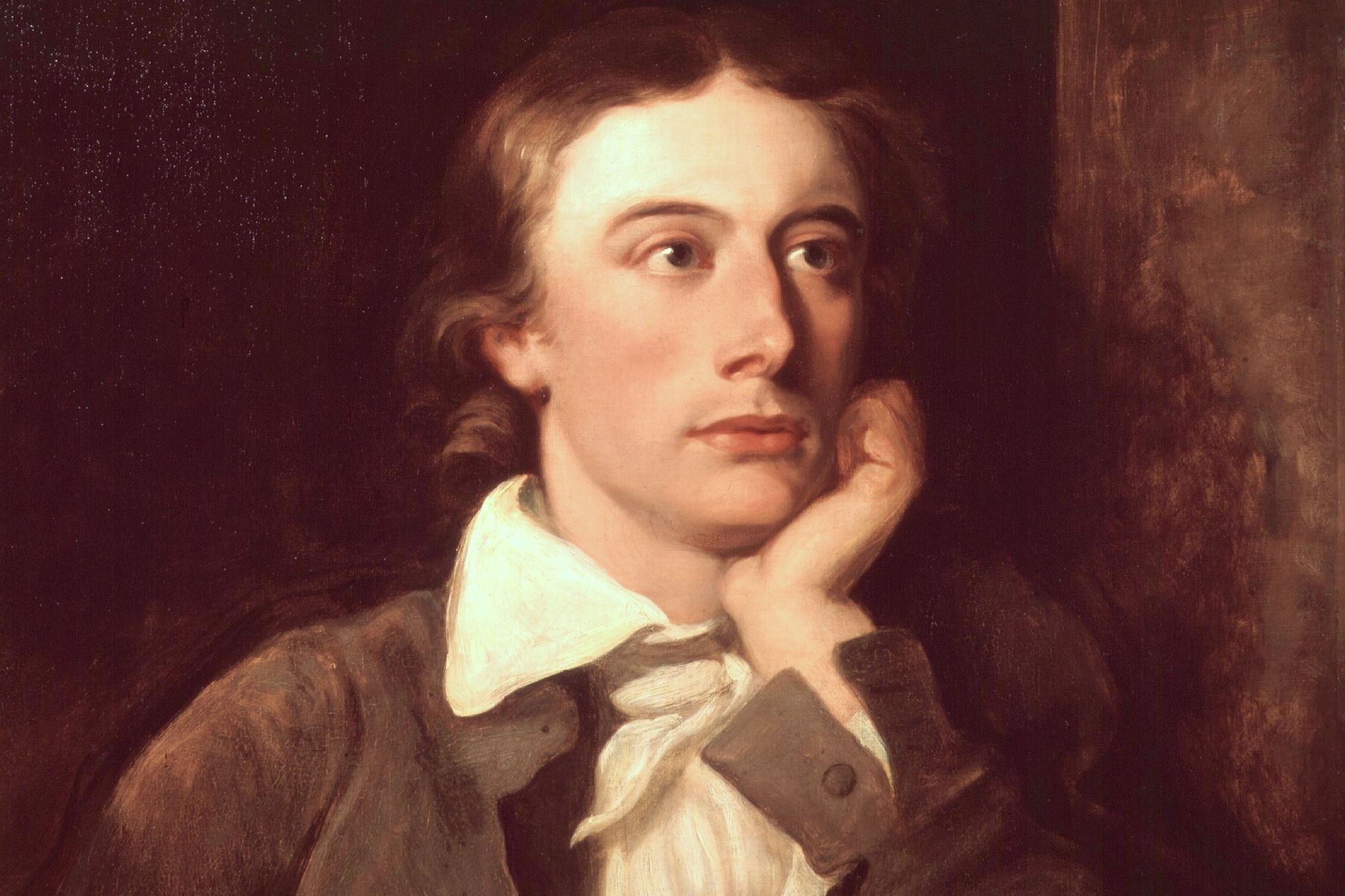
John Keats
 United Kingdom
Geburtstag
October 31, 1795
Sternzeichen
Scorpio
Geburtsort
Moorgate, London, England
Alter
Gestorben mit 25
Größe
5 ft 1 in (155 cm)
Über
John Keats was an English poet, a central figure in the second generation of Romantic poets. Though he died at 25, his work reshaped English poetry. His odes, sonnets, and letters are among the most studied in the language. Lines like "Beauty is truth, truth beauty" from Ode on a Grecian Urn have entered the cultural bloodstream. His reputation soared after his death; by the late 19th century, he was canonized. Today, his poems are read worldwide, and his life story, a brief, intense blaze cut short by tuberculosis, continues to fascinate.
Keats's style is sensuous and emotionally direct, rooted in natural imagery. His most celebrated works include Ode to a Nightingale, To Autumn, and the sonnet On First Looking into Chapman's Homer. He influenced the Pre-Raphaelite Brotherhood profoundly. Argentine writer Jorge Luis Borges called his first encounter with Keats a defining experience. Despite a career lasting less than four years, Keats's impact on poetry and art is vast and enduring.
Frühes Leben & Hintergrund
Keats wurde 1795 in Moorgate, London, als ältestes von vier überlebenden Kindern geboren. Sein Vater führte einen Reitstall und starb bei einem Reitunfall, als Keats acht Jahre alt war. Seine Mutter heiratete schnell wieder, die Ehe scheiterte, und sie starb 1810 an Tuberkulose. Diese Verluste prägten ihn tief.
1803 trat er in John Clarkes Internat in Enfield ein, eine liberale, dissentische Akademie. Er war als streitsüchtiger Junge bekannt, nicht besonders literarisch, bis er um das 13. Lebensjahr anfing, gierig zu lesen. Der Sohn des Schuldirektors, Charles Cowden Clarke, wurde zu einem Mentor, der ihm Bücher lieh und sein Schreiben ermutigte.
Nach dem Tod seiner Mutter wurde er von seinen Vormündern bei Thomas Hammond, einem Chirurgen und Apotheker in Edmonton, in die Lehre gegeben. Keats lebte über der Praxis und schloss in dieser Zeit eine Prosaübersetzung von Vergils Aeneis ab. Im Oktober 1815 begann er eine medizinische Ausbildung am Guy's Hospital in London. Bis März 1816 wurde er zum Dresser, einem leitenden chirurgischen Assistenten, befördert. 1816 wurde er zugelassener Apotheker, praktizierte aber nie.
Sein erstes veröffentlichtes Gedicht, der Sonett To Solitude, erschien am 5. Mai 1816 in The Examiner. Im Oktober 1816 traf er Leigh Hunt, der von seiner Arbeit verblüfft war. Am 3. Dezember 1816 stellte Hunts Artikel „Young Poets“ in The Examiner Keats neben Percy Bysshe Shelley der Öffentlichkeit vor.
Karriereentwicklung
Keats' erstes Werk, Gedichte von John Keats, wurde im März 1817 veröffentlicht. Es enthielt 30 Gedichte, darunter Beim ersten Blick in Chapmans Homer. Das Buch verkaufte sich schlecht. Im April 1818 wurde sein langer poetischer Roman Endymion veröffentlicht und erhielt vernichtende Kritiken. Kritiker nannten ihn einen „Cockney-Poetaster“ und griffen seine Sprache an.
Unbeirrt schrieb Keats 1819 in seinem „Großen Jahr“ sein bestes Werk. Er schuf Ode an die Nachtigall, Ode auf eine griechische Urne, Ode an Psyche, Ode auf die Melancholie, An den Herbst, Lamia, Die Nacht vor St. Agnes und La Belle Dame sans Merci. Er arbeitete auch an dem Epos Hyperion und dessen Überarbeitung Der Sturz des Hyperion, das bis 1856 unveröffentlicht blieb.
Sein drittes und letztes Werk, Lamia, Isabella, Die Nacht vor St. Agnes und andere Gedichte, wurde im Juli 1820 veröffentlicht. Es enthielt seine großen Oden und erhielt günstigere Kritiken. Damals war seine Tuberkulose fortgeschritten. Er segelte im September 1820 nach Italien, in der Hoffnung, das Klima würde helfen, starb aber am 23. Februar 1821 in Rom.
Karriereverlauf
Öffentliches Bild & Stil
Keats ist der archetypische romantische Dichter: leidenschaftlich, sinnlich, tragisch kurzlebig. Sein Bild ist das eines missverstandenen Genies, das jung starb und später rehabilitiert wurde. Seine Ästhetik ist definiert durch „negative capability“, ein von ihm geprägter Begriff für die Fähigkeit, in Ungewissheit zu verweilen, ohne nach Fakten zu greifen. Fans, oft Keatsianer genannt, sind in der Regel Literaturbegeisterte. Jährliche Lesungen im Keats House in Hampstead markieren seinen Geburtstag und seinen Todestag. Filme wie Jane Campions Bright Star (2009) festigten sein romantisiertes Bild. In sozialen Medien teilen Accounts seine Zitate und biografischen Details mit ehrfürchtigem Ton.
Ruhm & Fandom (iFAMOUS Rankings)
For over two centuries, the readership of John Keats has been defined not by organized campaigns or digital rituals, but by a deep, scholarly devotion to his brief and intense life. While modern celebrities cultivate named fanbases with specific hashtags and streaming drives, Keats remains the domain of students, literary critics, and enthusiasts who gather annually at Keats House in Hampstead for readings that honor his birthday and death anniversary. There is no formal name for this collective; they are simply those who find themselves drawn to the sensuous imagery and emotional directness of his odes and sonnets. The mythology surrounding him is entirely historical, rooted in the tragic narrative of a genius consumed by tuberculosis at age twenty-five and buried in Rome alongside Shelley. Stories of his deathbed regrets and his correspondence with Fanny Brawne have become enduring cultural touchstones, yet these remain biographical legends rather than active fan phenomena. The recovery of stolen letters in 2026 added a new chapter to this lore, confirming the existence of lost correspondence, but it did not spark a viral movement or transform him into a contemporary celebrity with an active social media presence. His legacy endures through the study of his work and the preservation of his manuscripts rather than through any living community of fans. As of August 2026, iFANN's Global Fame Engine has evaluated this person, but they do not currently hold a placement in the published rankings (Global Top 1,000 or a Top-100 scope list). Consequently, no specific numeric rank or score can be assigned to his current global standing within the system.
Interessante Fakten und Legenden
John Keats trained as a surgeon and held a license as an apothecary, though he never practiced medicine. Standing only 5'1", he was notably short for his era. At school, he was known more as a fighter than a bookish child. He completed his greatest poems during a single, prolific year in 1819. A grueling 640-mile walking tour of Scotland in 1818 likely accelerated the onset of the tuberculosis that eventually claimed his life. He nursed his brother Tom through the same disease that killed him, and his self-composed epitaph reads: "Here lies one whose name was writ in water." He never met Lord Byron, despite being contemporaries, and his first published poem appeared in a newspaper. Legends surrounding his life often focus on his rapid decline in Rome and the debate over whether he truly expressed regret on his deathbed before his passing. Another enduring story involves his relationship with Fanny Brawne, where their love, immortalized through surviving letters, became a symbol of Romantic tragedy. The 2026 news regarding the recovery of stolen letters sent to Brawne has further enriched this lore, revealing previously missing correspondence valued at approximately $2 million.
Bemerkenswerte Zitate
“Beauty is truth, truth beauty, that is all / Ye know on earth, and all ye need to know.”
“Here lies one whose name was writ in water.”
“A thing of beauty is a joy for ever: / Its loveliness increases; it will never / Pass into nothingness.”
“I am certain of nothing but the holiness of the Heart's affections and the truth of Imagination.”
“Negative Capability, that is when man is capable of being in uncertainties, Mysteries, doubts, without any irritable reaching after fact and reason.”
“I think I shall be among the English Poets after my death.”
Familie & Privatleben
Keats' Eltern waren Thomas Keats, ein Manager einer Reitstall, und Frances Jennings. Sein Vater starb 1804, nachdem er von einem Pferd zertrampelt worden war. Seine Mutter starb 1810 an Tuberkulose. Er hatte drei Geschwister: George (1797–1841), der nach Amerika auswanderte; Thomas „Tom“ (1799–1818), der an Tuberkulose starb; und Frances Mary „Fanny“ (1803–1889). Keats war seiner Schwester Fanny sehr zugetan und tief betroffen vom Tod von Tom. Er heiratete nie und hatte keine Kinder.
Bemerkenswerte Verbindungen
Keats wurde von Leigh Hunt gefördert, der sein erstes Gedicht veröffentlichte und ihn in literarische Kreise einführte. Er korrespondierte mit Percy Bysshe Shelley, der nach Keats' Tod die Elegie Adonais schrieb. Charles Cowden Clarke, der Sohn seines Schuldirektors, war ein enger Freund und früher Förderer. Er bewunderte William Wordsworth, traf aber nie Lord Byron. Seine Briefe offenbaren Freundschaften mit dem Maler Benjamin Haydon und dem Dichter John Hamilton Reynolds.
Beziehungen & Dating-Vergangenheit
Keats lernte Fanny Brawne im Herbst 1818 in Hampstead kennen. Sie war die Tochter einer verwitweten Nachbarin. Sie verlobten sich inoffiziell, aber Keats' Armut, seine schlechte Gesundheit und die Unmöglichkeit einer Heirat verhinderten eine formelle Verlobung. Ihre Beziehung war intensiv leidenschaftlich, aber von Keats' Eifersucht und Verzweiflung geprägt. Er schrieb ihr seinen Liebes-Sonett Bright Star. Sie heirateten nie. Fanny trauerte tief nach Keats' Tod und heiratete später 1833 Louis Lindo, mit dem sie drei Kinder hatte. Sie starb 1865. Keats' Briefe an sie wurden 1878 veröffentlicht und enthüllten seinen emotionalen Aufruhr. Keine anderen romantischen Beziehungen sind verzeichnet.
- VerlobtFanny Brawne1818 - 1821Inoffiziell verlobt; Keats' Armut und Krankheit verhinderten eine Heirat. Er schrieb 'Bright Star' für sie.
Tod und Nachwirkungen
Gestorben
February 23, 1821 (im Alter von 25 Jahren)
Sterbeort
London, England
Todesursache
Pulmonary tuberculosis
Upon hearing of John Keats's passing, the literary world responded with a surge of reverence that quickly eclipsed the obscurity he had endured during his life. Percy Bysshe Shelley composed the elegy Adonais in 1821, transforming the poet's death into one of the most famous tributes in English literature, while Lord Byron expressed regret over the early demise, noting that Keats had been killed by critics. This reaction evolved rapidly from muted silence to profound admiration among peers, establishing a legacy that would see him canonized by the late 19th century. The circumstances surrounding his final days were marked by physical decline and emotional distress following the rejection of Endymion, yet he managed to compose his major odes even as his health failed.
Keats passed away at his residence located at 26 Wimpole Street in London on February 23, 1821, at the age of 25. Physicians ruled the cause as pulmonary tuberculosis based on clinical symptoms including chronic coughing and hemoptysis, treating the event as a natural medical occurrence. His funeral was a private affair held four days later on February 27, 1821, at St. Peter's Cemetery in Bournemouth, attended only by family and close friends like his brother George and fiancée Fanny Brawne, who was too ill to attend the burial itself. He requested an epitaph reflecting his desire for anonymity, writing himself: Here lies One Whose Name was writ in Water.
Posthumously, his estate required minimal handling due to his lack of financial wealth, though posthumous collections appeared shortly after his death. Over time, institutions elevated his status through annual readings, museum dedications, and academic scholarships, with the John Keats Memorial Foundation bearing his name.
Vermögen (Nachlasswert)
$10 Million
Schätzung der iFANN-Redaktion
As a poet who died in 1821 at age 25, Keats had negligible personal wealth during his lifetime. His volumes sold poorly, and he relied on support from friends and his guardian's allowance. Today, his estate is not a commercial entity, and his works exist in the public domain. The primary value resides in rare manuscripts and letters. In 2018, a letter to Fanny Brawne sold for £112,500 at Sotheby's. Keats House in Hampstead and the Keats-Shelley Memorial House in Rome operate as museums. There is no reliable current net worth figure for the estate, but the value of his cultural legacy is immeasurable. Per iFANN's editorial analysis, as of 2026, the estimated value of his estate, including literary artifacts and museum properties, is around $10 Million.
Gewonnene Auszeichnungen (1)
Keats erhielt zu Lebzeiten keine formellen Literaturpreise. Das moderne Preissystem existierte im England des frühen 19. Jahrhunderts nicht. Posthum wurde er mit einem Stein in der Poets' Corner der Westminster Abbey geehrt, der 1997 enthüllt wurde. Seine Werke gelten als Meisterwerke der englischen Poesie.
1997 · Ehre
Lifetime achievement
Bekannt für
Ode to a Nightingale
1819 · Dichter
Ode on a Grecian Urn
1819 · Dichter
To Autumn
1819 · Dichter
Endymion
1818 · Dichter
Lamia
1819 · Dichter
The Eve of St. Agnes
1819 · Dichter
Schlagwörter
Quellen
Kurzfakten
- Beruf
- poet
- Geboren
- +1795-10-31
- Geburtsort
- Moorgate, London, England
- Gestorben
- +1821-02-23
- Sterbeort
- Rom, Italien
- Geschlecht
- Männlich
- Sternzeichen
- Scorpio
- Größe
- 5 ft 1 in (155 cm)
Persönliche Details
- Vollständiger Name
- John Keats
- Größe
- 5 ft 1 in (155 cm)
- Bildung
- Clarke's School, Enfield; Guy's Hospital, London
Häufig gestellte Fragen
Wie alt war John Keats, als er starb?
Wofür ist John Keats am bekanntesten?
Was war John Keats' Vermögen im Jahr 2026?
Hat John Keats jemals geheiratet?
Wo ist John Keats begraben?
Soziale Medien
Ähnliche Personen
Der Community beitreten
Fans diskutieren