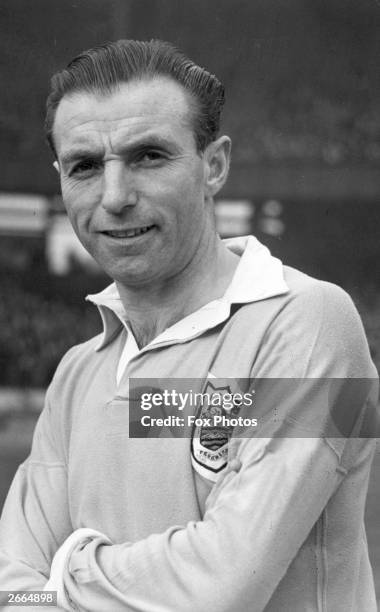
Stanley Matthews
 United Kingdom
association football player•autobiographer•association football coach
Also known as: The Wizard of Dribble, The Magician, Sir Stanley
Geburtstag
February 1, 1915
Sternzeichen
Aquarius
Geburtsort
Hanley, Stoke-on-Trent, Staffordshire, England
Alter
Gestorben mit 85
Größe
5 ft 7 in (1.70 m)
Über
Sir Stanley Matthews (1. Februar 1915 – 23. Februar 2000) war ein englischer Fußballspieler, der als Rechtsaußen spielte. Er gilt weithin als einer der größten Spieler in der Geschichte des Sports und ist der einzige Spieler, der noch während seiner aktiven Karriere zum Ritter geschlagen wurde, sowie der erste Gewinner sowohl des Ballon d'Or als auch der Auszeichnung zum Fußballer des Jahres der Football Writers' Association. Seine Spitznamen sind „The Wizard of Dribble“ und „The Magician“.
Matthews hielt sich fit genug, um bis zum Alter von 50 Jahren auf höchstem Niveau zu spielen. Er hält Rekorde als ältester Spieler in Englands höchster Spielklasse (50 Jahre, 5 Tage) und als ältester englischer Nationalspieler (42 Jahre, 104 Tage). Im Jahr 2002 wurde er als einer der ersten in die English Football Hall of Fame aufgenommen. Sein unverwechselbarer Dribbelstil, seine tadellose Sportlichkeit und seine Langlebigkeit machten ihn zu einer beliebten Figur über Generationen hinweg.
Heute lebt sein Vermächtnis durch die Sir Stanley Matthews Foundation, Statuen bei Stoke City und Blackpool sowie eine BBC-Dokumentation von 2022 weiter. Fans feiern noch immer den „Matthews Day“ an seinem Geburtstag, und sein Name ist Synonym für Anmut und Können auf dem Platz.
Frühes Leben & Hintergrund
Stanley Matthews wuchs im rauen Potteries-Viertel von Stoke-on-Trent auf, wo sein Vater Jack Friseur und professioneller Federgewichtsboxer war und seine Mutter Elizabeth Hausfrau. Er besuchte die Hanley High School, verließ sie jedoch mit 14 Jahren, um als Bürojunge zu arbeiten, und wurde später Maurerlehrling.
Von klein auf übte er stundenlang das Dribbeln mit einem Tennisball auf der Straße und entwickelte die enge Ballführung, die seine Karriere prägen sollte. Er spielte für lokale Juniorenmannschaften wie die St Luke's School und Hanley YMCA. Mit 17 Jahren trat er als Jugendlicher Stoke City bei und gab am 19. März 1932 sein Debüt in der ersten Mannschaft gegen Bury in der Second Division, wobei er bei einem 3:1-Sieg ein Tor erzielte. Diese Leistung erregte sofort nationale Aufmerksamkeit.
Karriereentwicklung
Matthews' Debüt in der ersten Mannschaft für Stoke City im Jahr 1932 läutete eine legendäre Karriere ein. Er half Stoke, 1932/33 den Meistertitel der Second Division zu gewinnen und in die First Division aufzusteigen. Am 29. September 1934 gab er im Alter von 19 Jahren sein England-Debüt gegen Wales. Nach 19 Jahren bei Stoke wechselte er 1947 für 11.500 £ zu Blackpool.
Bei Blackpool spielte er 1948 und 1951 in FA-Cup-Finals, die beide verloren gingen. 1953 lieferte er eine legendäre Leistung im „Matthews Final“, bei dem er drei Vorlagen gab und den Siegtreffer erzielte, als Blackpool einen 0:2-Rückstand aufholte und 4:3 gewann. 1956 gewann er den ersten Ballon d'Or. 1957 bestritt er sein 54. und letztes Länderspiel für England. 1961 kehrte er im Alter von 46 Jahren zu Stoke City zurück, half ihnen beim Aufstieg in die First Division und gewann 1962/63 einen zweiten Titel in der Second Division. Er trat 1965 im Alter von 50 Jahren zurück.
Karriereverlauf
Öffentliches Bild & Stil
Matthews war bekannt für sein tadelloses Dribbling, seinen tiefen Schwerpunkt, seinen charakteristischen „Matthews-Fint“ (eine Körpertäuschung gefolgt von einem Tempoburst) und seine makellosen weißen Schuhe. Die Medien porträtierten ihn als den „ersten Gentleman des Fußballs“ – bescheiden, demütig und ein Vorbild. Fans bei Stoke City und Blackpool singen noch immer seinen Namen, und der jährliche „Matthews Day“ wird am 1. Februar bei Stoke City gefeiert. Die Sir Stanley Matthews Foundation veröffentlicht historische Fotos und Würdigungen in den sozialen Medien und hält so sein Vermächtnis lebendig.
Ruhm & Fandom
For decades, the memory of Sir Stanley Matthews has been kept alive not by a formal fan club with a specific name, but through the enduring reverence of football historians, Blackpool supporters, and admirers of English sporting history. While modern pop culture often rallies behind branded mobs or organized campaigns, Matthews' legacy rests on institutional veneration rather than active fan-driven chart pushes or subway ads. His nickname "The Wizard" serves as a cultural shorthand for his identity, yet no single moniker defines a contemporary fandom in the way we see today. The National Football Museum and the Ballon d'Or organization maintain his story, with events like the 2026 London tribute underscoring how deeply his life is woven into the fabric of the sport. Despite this deep respect, iFANN's Global Fame Engine evaluated his standing in August 2026 and found that he currently holds no placement in the published rankings, including the Global Top 1,000 or any Top-100 scope list. This absence from the current numerical hierarchy reflects his status as a historical figure whose fame is now defined by permanence rather than fluctuating popularity metrics. While living stars rise and fall in the global consciousness, Matthews remains a fixed point in history, revered for his longevity and sportsmanship without needing to compete for a spot on a dynamic leaderboard. The lack of a documented fandom name simply mirrors the nature of his adoration: it is quiet, respectful, and embedded in the game itself rather than shouted from the stands of a modern movement.
Interessante Fakten und Legenden
Sir Stanley Matthews never received a yellow or red card throughout his entire career, a reflection of his impeccable sportsmanship. He was a dedicated teetotaller and non-smoker who maintained his legendary fitness on a strict diet of steak, eggs, and milk. One particularly famous match saw him dribble past the same defender four times in a single game, earning a rare standing ovation from the opposing fans. During World War II, he served in the Royal Air Force while continuing to play in wartime matches, balancing duty with his passion for the ball. A keen cricket enthusiast, he also played for Staffordshire County Cricket Club in the 1930s. In 1950, he famously turned down a lucrative move to Juventus to remain loyal to Blackpool. Fans still retell the story of the 1953 FA Cup Final, known as "Matthews' Mash," where at age 38, he led Blackpool to victory against Bolton Wanderers with an incredible display of skill. Another legend from his later years involves his time in Accra, Ghana, shortly after its independence in 1957, where he traveled to teach football and leave a lasting impact on African development. These stories, from his pristine white boots to his refusal to dive, cement his reputation as the first gentleman of football.
Bemerkenswerte Zitate
“Football is a simple game; the hard part is making it look simple.”
“I never thought of myself as a great player. I just tried to do my best every time I played.”
“The secret of my longevity is that I never abused my body. No alcohol, no tobacco, and I went to bed early.”
“That final was the greatest day of my life. The crowd lifted me. I felt I could dribble through anything.”
Familie & Privatleben
Stanley Matthews wurde als Sohn von Jack Matthews, einem Friseur und professionellen Federgewichtsboxer, und Elizabeth Matthews, einer Hausfrau, geboren. Aus erster Ehe hatte er zwei Söhne: Stanley Matthews Jr. (geb. 1941) und Robert Matthews (geb. 1943). 1940 heiratete er Betty Vallance; die Ehe wurde Anfang der 1970er Jahre geschieden. 1975 heiratete er Mila Winterflood, eine in Südafrika geborene Witwe, und sie blieben bis zu seinem Tod im Jahr 2000 zusammen. Aus zweiter Ehe gingen keine Kinder hervor. Seine Familie verwaltete nach seinem Tod seinen Nachlass.
Bemerkenswerte Verbindungen
Matthews spielte häufig zusammen mit Stan Mortensen bei Blackpool, Jackie Milburn für England und Neil Franklin bei Stoke City. Zu seinen Trainern gehörten Bob McGrory bei Stoke und Joe Smith bei Blackpool. Er war ein Zeitgenosse und Freund von Tom Finney. Posthum wurde sein Vermächtnis durch Dokumentationen mit der BBC und Partnerschaften mit Stoke City und dem Blackpool FC gefördert.
Beziehungen & Dating-Vergangenheit
Stanley Matthews heiratete 1940 Betty Vallance. Sie hatten zwei Söhne, Stanley Jr. und Robert, aber die Ehe wurde Anfang der 1970er Jahre geschieden, nach jahrzehntelanger Trennung aufgrund von Matthews' Fußballverpflichtungen und Reisen. 1975 heiratete er Mila Winterflood, eine in Südafrika geborene Witwe, die er während seiner Trainertätigkeit in Südafrika kennengelernt hatte. Sie blieben bis zu seinem Tod im Jahr 2000 zusammen. Mit Stand 2026 ist Matthews verstorben; zum Zeitpunkt seines Todes war er mit Mila verheiratet.
- VerheiratetBetty Vallance1940 - 1970In den frühen 1970er Jahren geschieden, nach jahrzehntelanger Trennung aufgrund von Fußballverpflichtungen.
- VerheiratetMila Winterflood1975 - 2000AktuellTrafen sich während des Coachings in Südafrika; blieben bis zu seinem Tod zusammen.
Tod und Nachwirkungen
Gestorben
February 23, 2000 (im Alter von 85 Jahren)
Sterbeort
Hanley, Stoke-on-Trent, England
Todesursache
reported as natural causes associated with advanced age
Sir Stanley Matthews spent his final years residing in Hanley, a district of Stoke-on-Trent, where he participated in charity matches well into his eighties. On February 23, 2000, the legendary footballer passed away at his home in Hanley at the age of 85. The circumstances surrounding his final days were reported as natural causes associated with advanced age, marking a quiet end for a man who had dedicated his life to sport without any disputed events or legal inquiries. The reaction to his passing was one of profound national mourning, with tributes pouring in from peers, institutions, and officials across the United Kingdom and internationally.
He was universally recognized as "The Gentleman of the Game," a title that became synonymous with his legacy immediately following his death. Major outlets highlighted his immense influence, noting him as the greatest player in the history of English football. Memorial landmarks include his induction into the National Football Museum Hall of Fame, which serves as a permanent tribute to his career spanning Blackpool, Stoke City, and England. Funeral services were held shortly after his death in late February 2000, with the burial taking place in the family plot at Hanley Cemetery. The service was attended by numerous dignitaries, former teammates, and fans who came to pay their respects to the man who had captivated the nation for decades.
Posthumously, his legacy has been extensively honored through various releases, awards, and dedications, including plans for the Ballon d'Or ceremony to move to London in 2026 to honor his roots. While specific details regarding his estate remain unconfirmed in available sources, the focus remains on the enduring respect accorded to a national icon.
Vermögen (Nachlasswert)
$3 Million
Schätzung der iFANN-Redaktion
Heading into 2026, the estate of Sir Stanley Matthews is estimated at $3 Million per iFANN's editorial analysis. Since his passing in 2000, the estate has been carefully managed by his sons. Revenue streams include posthumous royalties from his autobiography "The Stanley Matthews Story," which has been reissued multiple times, alongside licensing deals for merchandise and memorabilia. Image rights continue to generate income through their use in video games such as FIFA and Football Manager. The estate also manages businesses like football camps and charity events. During his playing career, Matthews earned modest salaries, peaking at £20 per week in the 1950s. His knighthood and subsequent coaching roles provided additional income during his lifetime. The estate's value has grown steadily over the years through these licensing arrangements rather than major commercial ventures.
Gewonnene Auszeichnungen (18)
Matthews gewann den ersten Ballon d'Or 1956 und die erste Auszeichnung zum Fußballer des Jahres der Football Writers' Association 1948. Er gewann den FA Cup mit Blackpool 1953, zwei Meistertitel in der zweiten Liga mit Stoke City (1932–33, 1962–63) und neun British Home Championship-Titel mit England. Er wurde 1965 zum Ritter geschlagen und 2002 in die English Football Hall of Fame aufgenommen.
1956 · Europas Fußballer des Jahres
1948 · Fußballer des Jahres
Bekannt für
Matthews Final
1953 · Blackpool winger
Ballon d'Or
1956 · Winner
Stoke City
1932-1947, 1961-1965 · Outside right
England national team
1934-1957 · Outside right
Schlagwörter
Kurzfakten
- Beruf
- association football player, autobiographer, association football coach
- Geboren
- +1915-02-01
- Geburtsort
- Hanley
- Gestorben
- +2000-02-23
- Sterbeort
- Newcastle-under-Lyme
- Geschlecht
- Männlich
- Sternzeichen
- Aquarius
Persönliche Details
- Vollständiger Name
- Stanley Matthews
- Größe
- 5 ft 7 in (1.70 m)
- Ehepartner
- Mila Winterflood
- Kinder
- Stanley Matthews Jr., Robert Matthews
- Bildung
- Left school at 14
Häufig gestellte Fragen
War Stanley Matthews der älteste Fußballer aller Zeiten?
Hat Stanley Matthews jemals an der Weltmeisterschaft teilgenommen?
Warum wird Stanley Matthews ‚Der Zauberer des Dribbelns‘ genannt?
Wie viele Tore erzielte Stanley Matthews?
Was machte Stanley Matthews nach dem Fußball?
Soziale Medien
Ähnliche Personen
Der Community beitreten
Fans diskutieren