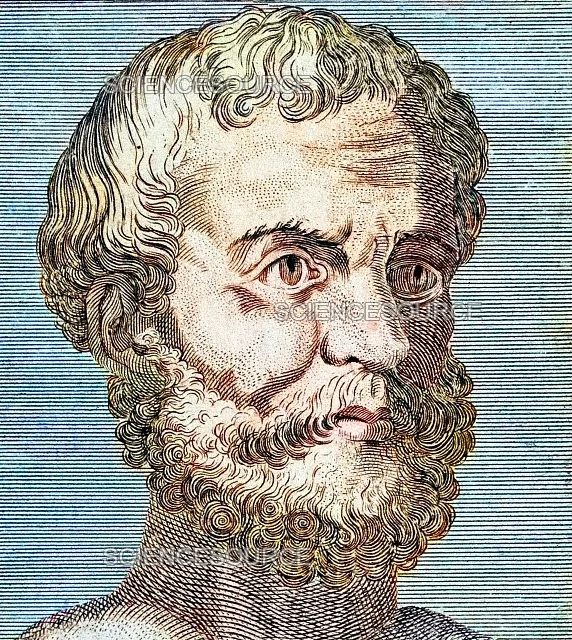
Theophrastus
 Greece
philosopher•botanist•physicist
Also known as: Tyrtamus
Geburtstag
c. 371 BCE
Sternzeichen
Geburtsort
Eresos, Lesbos, Greece
Alter
Gestorben mit 84
Über
Theophrastus was the ancient Greek philosopher and naturalist who succeeded Aristotle as head of the Peripatetic school in Athens. Born Tyrtamus on the island of Lesbos around 371 BCE, he earned the nickname Theophrastus, meaning divine speaker, from Aristotle himself for his eloquence. He is widely regarded as the father of botany for his systematic works Historia Plantarum and De Causis Plantarum, which classified over 500 plant species and remained authoritative for nearly two millennia. Beyond botany, his surviving works include Characters, a collection of thirty witty sketches of moral types that influenced later European literature, and fragments on metaphysics, ethics, and the history of philosophy. He led the Lyceum for about 35 years, expanding its library and research programs, and produced an estimated 227 treatises, though most are lost. His legacy endures in both the history of science and philosophy, where he is remembered as a methodical observer and a pivotal figure who carried forward the Aristotelian tradition.
Frühes Leben & Hintergrund
Theophrastus wurde um 371 v. Chr. in Eresos, einer kleinen Stadt auf der Insel Lesbos, geboren. Sein Vater Melantas arbeitete als Walker, der Tuch reinigte und färbte. Er begann sein Philosophiestudium bei einem lokalen Lehrer namens Alcippus, bevor er nach Athen zog, wo er die Platonische Akademie besuchte. Nach Platons Tod im Jahr 347 v. Chr. wurde er ein enger Mitarbeiter von Aristoteles, dem er nach Assos und dann nach Mytilene folgte. Es war Aristoteles, der ihm den Namen Theophrastus gab, beeindruckt von seiner Redefähigkeit. Als Aristoteles um 335 v. Chr. das Lykeion in Athen gründete, arbeitete Theophrastus als sein vertrautester Mitarbeiter an seiner Seite. Er war beim frühen Wachstum der Schule dabei und wurde von Aristoteles als sein Nachfolger auserwählt, als antimakedonische Stimmung Aristoteles 323 v. Chr. zur Flucht aus Athen zwang.
Karriereentwicklung
Theophrastus übernahm das Lykeion im Jahr 322 v. Chr. und leitete es die nächsten 35 Jahre. Unter seiner Leitung florierte die Schule, zog viele Studenten an und erweiterte ihre Bibliothek. In dieser Zeit verfasste er seine wichtigsten botanischen Werke: Historia Plantarum in zehn Bänden und De Causis Plantarum in acht Bänden, die systematisch Pflanzenanatomie, Klassifikation und Fortpflanzung beschreiben. Diese Werke brachten ihm den Titel Vater der Botanik ein. Er verfasste auch Characters, eine Reihe von dreißig kurzen Skizzen von Persönlichkeitstypen wie dem Schmeichler und dem Grobian, die zu einem literarischen Vorbild für spätere Schriftsteller wurden. Seine Meinungen der Physiker bewahrten wichtige Fragmente der vorsokratischen Philosophie. In seinem Testament, das von Diogenes Laërtius überliefert wurde, vermachte er die Bibliothek und den Garten der Schule seinen Nachfolgern und sicherte so den Fortbestand des Lykeions.
Karriereverlauf
Öffentliches Bild & Stil
Theophrastus wird in Kunst und Literatur als ruhiger, methodischer Gelehrter dargestellt, als das stille Genie, das dem überragenden Aristoteles nachfolgte. Seine Ästhetik ist die des antiken griechischen Philosophen: oft mit einer Pflanze oder Schriftrolle dargestellt, die seine botanische und literarische Arbeit repräsentieren. Er wird mit der peripatetischen Schule assoziiert, die für das Lehren beim Gehen bekannt ist. Moderne Darstellungen betonen seine systematische Beobachtung und sein enzyklopädisches Wissen. Akademische Konferenzen und Übersetzungsprojekte halten sein Vermächtnis lebendig, und auf Plattformen wie X und YouTube wird über ihn in formellen, bildenden Tönen gesprochen.
Ruhm & Fandom (iFAMOUS Rankings)
Theophrastus commands a legacy defined not by screaming crowds or viral moments, but by the quiet endurance of texts that shaped science for two thousand years. His audience was never a frenzied mob; it was a lineage of scholars, naturalists, and philosophers who copied his manuscripts by hand to preserve his classifications of plants and sketches of human character. There is no modern fandom name because no organized fanbase exists for a figure who lived over two millennia ago. His influence operates through academic reverence rather than pop-culture rituals, with his work on plant diseases and moral types serving as foundational texts rather than merchandise. The concept of fans fainting at his appearance or shutting down streets is historically impossible, as his interactions were confined to the Lyceum in Athens and the written word. iFANN has evaluated his standing within the global cultural landscape, finding that while his intellectual footprint is massive, he does not hold a current placement in the published rankings (Global Top 1,000 or a Top-100 scope list). The absence of a formal fanbase underscores the distinction between ancient scholarly impact and modern celebrity culture. While no one campaigns for him today, his presence remains constant in botanical studies and ethical philosophy.
Interessante Fakten und Legenden
Theophrastus stands as the first scholar to document plant diseases, specifically noting the presence of mildew on vines. He authored lost treatises on drunkenness and animals capable of changing color. His collection *Characters* offered thirty witty sketches of moral types, serving as a precursor to modern personality tests. Diogenes Laërtius recorded that his funeral drew the entire population of Athens, a rare honor reflecting his deep civic respect. He observed that seeds could remain viable for years after storage, a critical insight for early agriculture. His short work *Metaphysics* challenges readers to consider whether the universe possesses an inherent purpose. A defining moment in his life occurred upon Aristotle's death around 322 BCE, when he succeeded the towering philosopher as head of the Peripatetic school. He led the Lyceum for approximately 35 years, cementing his role as the "Father of Botany" through systematic works like *Historia Plantarum*. These writings classified over 500 plant species and remained authoritative for nearly two millennia. Another enduring story involves his *Characters*, which influenced writers from Jean de La Bruyère to modern authors discussing ego and time management. In 2025 and 2026, news outlets referenced these profiles to analyze political figures, proving his psychological insights remain relevant. His relationship with the public was strictly that of a teacher and writer, leaving no room for modern fan rituals or viral incidents.
Bemerkenswerte Zitate
“Time is the most valuable thing a man can spend.”
“We must consider the nature of plants, their parts, their habits, their life, their generation, and their diseases.”
“The superstitious man is one who will not step on a stone that has been consecrated, nor sit on a tomb, nor go near a corpse.”
Familie & Privatleben
Theophrastus war nie verheiratet und hatte keine Kinder. Sein Vater Melantas war ein Walker aus Eresos. Er hatte keine bekannten Geschwister. Sein Haushalt bestand nur aus ihm selbst und seinen Büchern. Er lebte bescheiden als Gelehrter und widmete sein Leben dem Lykeion. In seinem Testament traf er Vorkehrungen für den Garten und die Bibliothek der Schule, was zeigt, dass sein Vermächtnis seine Arbeit und nicht eine Familienlinie war.
Bemerkenswerte Verbindungen
Theophrastus war ein Schüler von Platon und Aristoteles und folgte Aristoteles als Leiter des Lykeions nach. Ihm wurde die Fürsorge für Aristoteles' Sohn Nikomachos anvertraut. Sein Nachfolger als Scholarch war Straton von Lampsakos. Der Biograph Diogenes Laërtius zeichnete sein Leben und seine Werke auf. Der römische Naturforscher Plinius der Ältere zitierte Theophrastus ausgiebig in seiner Naturalis Historia.
Beziehungen & Dating-Vergangenheit
Theophrastus war nie verheiratet und hatte keine dokumentierten romantischen Beziehungen. Antike Quellen, darunter Diogenes Laërtius, beschreiben ihn als lebenslangen Junggesellen, der der Philosophie ergeben war. Es gibt keine glaubwürdigen Belege für öffentliche oder private Partnerschaften. Er starb kinderlos in Athen um 287 v. Chr.
Tod und Nachwirkungen
Gestorben
c. 287 BCE (im Alter von 84 Jahren)
Sterbeort
Athens
Todesursache
reported natural causes (old age)
Theophrastus ceased to be recorded around 287 BCE in Athens, ending a career that had defined the Peripatetic school for nearly half a century. Historical tradition places his passing at roughly eighty-five years of age, marking the end of an era where he succeeded Aristotle as the head of the Lyceum. The silence surrounding his last hours reflects the historical reality of ancient Greece, where such details were rarely preserved for scholars who died of old age. Immediate reaction focused on the continuity of the school rather than public mourning rituals. His successor, Strato of Lampsacus, assumed leadership without disruption, ensuring the institution survived the transition., his name became synonymous with the study of plants and moral observation. The Peripatetic school maintained his writings as core curriculum, effectively making his intellectual estate the primary vehicle for his posthumous influence. Centuries later, historians still cite his classifications and sketches as foundational to Western science and literature.
Vermögen (Nachlasswert)
$0
Schätzung der iFANN-Redaktion
Theophrastus departed this world in the 3rd century BCE leaving behind no modern estate to manage. He lived a modest existence as a scholar, owning only books and personal effects within his Athenian home. His intellectual property now rests entirely in the public domain, with no active estate administering revenue streams or commercial licensing. His legacy remains purely cultural and scientific rather than commercial. Per iFANN's editorial analysis, his estimated net worth stands at $0.
Auszeichnungen & Ehrungen
View 3 records, honours and achievementsBekannt für
Historia Plantarum
c. 315 BCE · Autor
De Causis Plantarum
c. 315 BCE · Autor
Characters
c. 319 BCE · Autor
Schlagwörter
Kurzfakten
- Beruf
- philosopher, botanist, physicist
- Geboren
- c. 371 BCE
- Geburtsort
- Eresos, Lesbos, Greece
- Gestorben
- c. 287 BCE
- Sterbeort
- Athens, Greece
- Geschlecht
- Männlich
Persönliche Details
- Vollständiger Name
- Tyrtamus
- Bildung
- Studied under Alcippus in Lesbos; attended Plato's Academy in Athens; studied under Aristotle
Häufig gestellte Fragen
Wofür ist Theophrastus berühmt?
Ist Theophrastus der Vater der Botanik?
Hatte Theophrastus Kinder?
Wie alt war Theophrastus bei seinem Tod?
Wie lautet Theophrastus' richtiger Name?
Ähnliche Personen
Der Community beitreten
Fans diskutieren